Rockbox on Maemo

Monday, January 24th, 2011

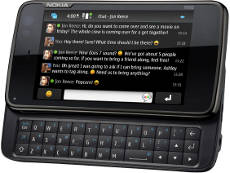
Nokia-N900Thomas Jarosch has been quite busy and worked a lot on the Rockbox port for Maemo, it is the direct result of the previous work on making it possible to run Rockbox as an app on top of operating systems. It is still early and there are things missing, but it is approaching usable really fast it seems
The work on the app for Android has also been progressing over time and even though it is still not available to download from the Android Market, the apk is updated regularly and pretty functional.

From Magic to Desire HD

Monday, December 13th, 2010

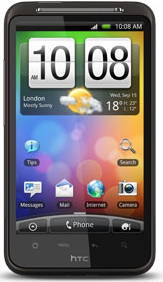
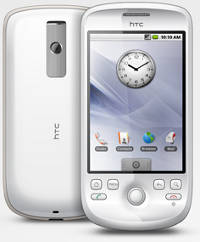
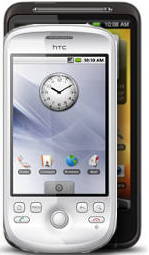
htc-desire-hdI got into the world of Android for real when I got my HTC Magic in July last year, as my first smart phone. It has served me well for almost 18 months and now I’ve taken the next step. I got myself an HTC Desire HD to replace it. For your and my own pleasure and amusement, I’m presenting my comparison of the two phones here.

The bump up from a 3.2″ screen at 480×320 to a 4.3″ 800×480 is quite big. The big screen also feels crisper and brighter, but I’m not sure if the size helps to give that impression. Even though the 4.3″ screen has the same resolution that several phones already do at 3.7″ the pixel density is still higher than my old phone’s and if I may say so: it is quite OK.

The Desire HD phone is huge. 68 mm wide, 11.8mm thick and 123 mm tall and a massive 164 grams makes it a monster next to the magic. The Magic is 55.5 mm wide, 13.6 mm think and 113 mm tall at 116 grams.

So when put on top of the HD with two sides aligned, the HD is 10mm larger in two directions. Taken together, the bigger size is not a problem. The big screen is lovely to use when browsing the web, reading emails and using the on-screen keyboard. I don’t have any problems to slide the phone into my pocket and the weight is actually a pretty good weight as it makes the phone feel solid and reliable in my hand. Also, the HD has much less “margin” outside of the screen than the Magic, so the percentage of the front that is screen is now higher.

The big screen makes the keyboard much easier to type on. The Androd 2.2 (Sense?) keyboard is also better than the old 1.5 one that was shipped on the Magic. The ability to switch language quickly is going to make my life soooo much better. And again, the big screen makes the buttons larger and more separated and that is good.

The HD has soft buttons on the bottom of the phone, where the Magic has physical ones. I actually do like physical ones a bit better, but I’ve found these ones to work really nice and I’ve not had much reason to long for the old ones. I also appreciate that the HD has the four buttons in the same order as the Magic so I don’t have to retrain my spine for that. The fact that Android phones can have the buttons in other orders is a bit confusing to me and I think it is entirely pointless for manufacturers to not go with a single unified order!HTC Magic

I never upgraded the Magic. Yes, I know it’s a bit of a tragic reality when a hacker-minded person like myself doesn’t even get around to upgrade the firmware of his phone, and I haven’t experienced cyanogenmod other than through hearsay yet. Thus, the Android 2.2 on the HD feels like a solid upgrade from the old and crufty Magic’s Android 1.5. The availability of a long range of applications that didn’t work on the older Android is also nice.

Desire HD is a fast phone. It is clocked at twice the speed as the Magic, I believe the Android version is faster in general, it has more RAM and it has better graphics performance. Everything feels snappy and happens faster then before. Getting a web page to render, installing apps from the market, starting things. Everything.

The HTC Magic was the first Android phone to appear in Sweden. It was shipped with standard Android, before HTC started to populate everything with their HTC Sense customization. This is therefore also my introduction to HTC Sense and as I’ve not really used 2.2 before either, I’m not 100% sure exactly what stuff that is Sense and what’s just a better and newer Android. I don’t mind that very much. I think HTC Sense is a pretty polished thing and it isn’t too far away from the regular Android to annoy me too much.

HTC Desire HD under a HTC MagicI’ve not yet used the HD enough in a similar way that I used the Magic to be able to judge how the battery time compares. The Magic’s 1340 mAh battery spec against the HD’s 1230 mAh doesn’t really say much. The HD battery is also smaller physically.
USB micro vs mini. The USB micro plug was designed to handle more insert/unplug rounds and “every” phone these days use that. The Magic was of the former generation and came with a mini plug. There’s not much to say about that, other that the GPS in my car uses a mini plug and thus the cable in the car was conveniently able to charge both my phone and GPS, but now I have to track down a converter so that I don’t have to change between two cables just for that reason.

The upgrade to a proper earphone plug is a huge gain. The Magic was one of the early and few phones that only had a USB plug for charging, earphones and data exchange. The most annoying part of that was that I couldn’t listen with my earphones while charging.

The comparison image on the right side here is a digital mock-up that I’ve created using the correct scale, so it shows the devices true relative sizes. I just so failed at making a decent proper photograph…

What is Android anyway

Monday, December 6th, 2010

Android, the software environment, has gotten a lot of press, popularity and interest from all over lately. People on the streets know there’s something called Android, companies know people know and so on. Everyone (well apart from a few competitors perhaps) likes Android it seems.

Being an embedded guy I like keeping an eye on the embedded world and Android being pretty embedded this at least tangents my universe. What is Android anyway? android.com says Android is “an open-source software stack for mobile devices, and a corresponding open-source project led by Google“. Not very specific, is it?

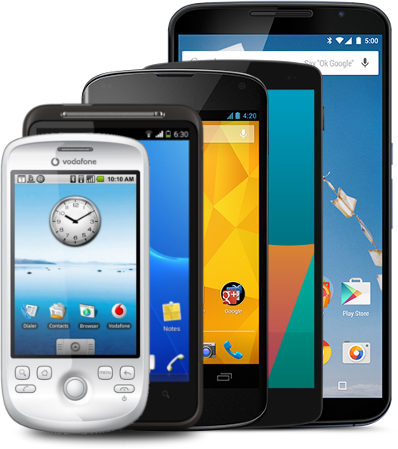
Android on different devicesAndroid

You can already find Android on mobile phones, media players, tablets, TVs and more. Very soon we’ll see it in car infotainment equipment, GPSes and all sorts of things that have displays. Clearly Android is not only for mobile phones and not even necessarily for mobile things. TVs often aren’t that mobile… And not touchscreen either.

Android with tweaks

The fact that there hardly are two Android installs completely alike is frequently debated. Lots of manufacturers patch and change the look and feel of Android to differentiate. Android is not associated with any particular look or feel quite clearly.

Samsung Galaxy Tab

Android with binary drivers

Almost all Android installations you get on the Android phones and devices today have a fair amount of closed, proprietary drivers. It means that even if the companies provide the source code for all the free parts in time (which they sometimes have a hard time to do it seems), there are still parts that you don’t get to see the code for. So getting a complete Android installation from source to run on your newly purchased Android device can be a challenge. Also, it shows that Android can consist of an unspecified amount of extra proprietary pieces that don’t disqualify it from being Android.

Android without apps

I have friends who work on devices where the customer has request them to run Android, although they don’t have any ability to run 3rd party apps. Android is then only there for the original developers writing specific code for that device. Potential buyers of that device won’t get any particular Android benefits that they might be used to from their mobile phones running Android, as the device is completely closed in all practical aspects.

Android without market

Devices that don’t meet Google’s demands and don’t get to be “Google certified” don’t get to install the google market app etc, but at least a company who wants to can then in fact install their own market app or offer another way for customers to get new apps. The concept of getting and installing apps aren’t bound to the market app being there. In fact, I’ve always been expecting that some other companies or parties would come along and provide an alternative app that would offer apps even to non-google-branded devices but obviously nobody has yet stepped up to provide that in any significant way.

Android without Java

I listened  to a talk at an embedded conference recently where the person did a 40 minute talk on why we should use Android on our embedded systems. He argued that Android was (in this context) primarily good for companies because it avoids GPL and LGPL to a large extent. He talked about using “Android” in embedded devices and cutting out everything that is java, basically only leaving the Linux kernel and the BSD licensed bionic libc implementation. Of course, bionic may now also provide features to the rest of the system that glibc and uClibc do not, they being designed as more generic libcs.

Personally, I would never call anything shipped without the Java goo layers to be Android. But since it was suggested, I decided to play with the idea that a platform can be “Android” even without Java…

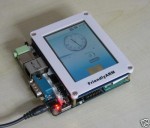
mini2440

That particular license-avoiding argument of course was based on what I consider is a misunderstanding. While yes, lots of companies have problems with or are downright scared of the GPL and LGPL licences, but I’ve yet to meet a company who have any particular concerns about the licensing of the libc. I regularly meet and discuss with companies who have thoughts and worries about GPL in the kernel and they certainly often don’t like *GPL in regular libraries that they linked with in their applications. I have yet to find a customer who is worried about the glibc or uClibc licenses.

In fact, most embedded Linux customers also happily run busybox that is GPL although we know from history that many companies do that in violation with the license rules, only to get the lawyers running after them.

HTC Magic

Android is what?

As far as I know Android is a trademark of some sorts, and so is Linux. If you can run an “Android” that is just a kernel and libc (and I’m not saying this is true beyond doubt because I’ve not heard anyone authoritative say this), isn’t that then basically a very very small difference to any normal vanilla embedded Linux?

The latter examples above are even without any kind of graphical UI or user-visible interface, meaning that particular form of “Android” can just as well run your microwave or your wifi router.

Without the cruft can we change the kernel?

The Android team decided that a bunch of changes to the Linux kernel are necessary.to make Android. The changes have been debated back and forth, some of them were merged into mainline Linux only to later get backed out again while the greater part of them never even got that far. You cannot run a full-fledged Android system on a vanilla kernel: you need the features the patches introduce.

If we’re not running all the java stuff do we still need those kernel patches? Is bionic made to assume one or more of them? That brings me to my next stepping stone along this path:

Without the patches can we change libc?

If we don’t run the java layers, do we really have to run the bionic libc? Surely the Android kernel allows another libc and if we use another libc we don’t need the Android kernel patches – unless we think they provide functionality and features that really improve our device.

Android is the new Linux?ASUS M2NPV MX Motherboard

Android as a name to describe something really already is just as drained as Linux. All these Android devices are just as much Linux devices and just as a “linux device” doesn’t really tell anything about what it is actually more than what kernel it runs, neither does it seem “Android device” will mean in the long run or perhaps already.

Android however has reached some brand recognition already among mortals. I think Android is perceived as something more positive in the minds of the consumer electronic consumers than Linux is. Linux is that OS that nobody uses on their desktops, Android is that cool phone thing.

I will not be the slightest surprised if we start to see more traditional Linux systems call themselves Android in the future. Some of them possibly without changing a single line of code. Linux one day, Android the next. Who can tell the difference anyway? Is there a difference?

git, patents, meego and android

Wednesday, October 27th, 2010

dotse-logoAt this Tuesday afternoon, almost 100 people apparently managed to escape work and attend foss-sthlm’s fourth meeting. This time graciously sponsored by .SE who stood for the facilities, the coffee etc. Thank you .SE! Yours truly did his best to make it happen and to make sure we had a variety of talks by skilled people and I think we did good this time as well! This meeting took place at the same time the big Internetdagarna conference had their 6(!) parallel tracks in the building just next to ours, so it was also rather fierce competition for attention.
Robin with git

Robin Rosenberg started off the sessions by telling us about git and related dives into JGit, EGit, gerrit, code reviews and Eclipse. Robin is a core developer in the EGit/JGit projects. While I think I know at least a little git already, Robin provided an overlook over several different things in a good way. (It should be noted that Robin was called in very late in the game due to another talker having to drop out.)

As a side-note, I will never cease to be amazed by the habit in Java land to re-implement everything in “pure Java” instead of simply wrapping around the existing code/tools and leveraging what already exists and is stable…

Jonas with patents

Jonas Bosson spoke about the dangers with software patents and how they are not good, they’re hindering innovation and cost a lot of money for everyone involved. He also pledged the audience to join FFII to help the cause. You can tell Jonas is quite committed to this subject and really believes in this! And quite frankly, I don’t think a lot of people in this surrounding would argue against him…

Andreas with MeegoMeeGo

Andreas Jakl, just arrived from a rainy Helsinki, then told us (in English while all the other talks were in Swedish) about how to develop stuff with Qt for Symbian, Meego or desktop using the same tools. He showed us the latest fancy GUI builder they have called Qt Quick and how they use QML to do fancy things in a fast manner. He also managed to show us the code running in simulator and on device. Quite impressive. Andreas is a very good speaker and did a very complete session. As a bonus point, he used ‘haxx.se’ as test site for demonstrating his little demo build and of course you can’t help loving him more then? ;-)

Johan with Android

Android

Johan Nilsson started off just after the coffee break with educating us how you can do push stuff from your server applications to your mobile device. How it works and how to control that in various way. Johan’s presentation was into details, in a way at least I really appreciated it, and his (hand drawn on paper then scanned) graphics used in the presentation were stunning! The fact that Johan sneaked in a couple of curl command lines of course gave him bonus points in my mind! ;-)

Henrik with FribidFribid

Henrik Nordström took the stage and briefed us on the status of the Fribid project, which is a very Swedish-centric project that works on implementing full Linux support for “bankid” which is a electronic identification system established by a consortium of Swedish banks and is used by a wide range of authorities and organizations these days. The existing Linux client is poor (and hard to get working right), closed source, saves data encrypted with private hidden keys etc.

Food, Talk, Tablets

We_Tab-140-Motiv_4-3

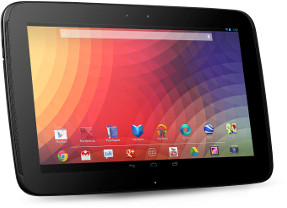
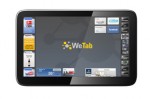
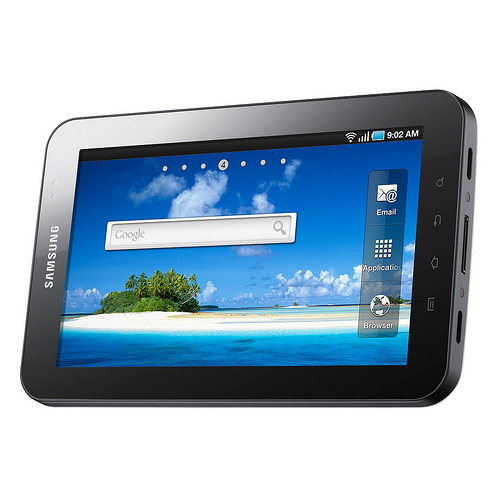
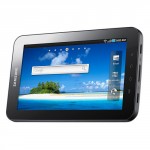
In the restaurant after the seminaries, we gathered in a basement with beer in our glasses and chili on our plates and there was lots of open source and foss talks and we had a great time and good drinks. Two attendees brought their new tablets, which made us able to play with them and compare. the Android Samsung Galaxy Tab and the german Meego based WeTab.

Samsung Galaxy TabTo me there really wasn’t any competition. The Galaxy Tab is a slick, fast and nice device that feels like a big Android phone and it’s really usable and I could possibly see myself using it for emails and browsing. It was a while since I tried an Ipad but it gave about the same speed impression.

The WeTab however, even if it runs a modified Meego that isn’t “original” and that might suffer from bugs and what not, was a rough UI that looked far too much like my regular X Window system put in a touch device. For example, and I think this is telling, you scroll a web page down by using the right-side scroll bar and not by touching the screen in the middle and dragging it down like you’d do on IOS or Android. In fact, when I dragged down the scroll-bar like that I found it far too easy to accidentally then press one of the buttons that are always present immediately to the right of the scrollbar. Of course, the Galaxy Tab is a smaller device and also much more expensive, so perhaps those factors will bring a few users to WeTab then still.

I don’t think I’ll get a tablet anytime soon though, I just don’t see when I would use it.

Summary

I didn’t do any particular talk this time, but I felt we had a lot of good content and I can always blurb another time anyway. I really really like that we so far have managed to get lots of different speakers and I hope that we can continue to get many new speakers before we have to recycle.

It was a great afternoon and evening. All the good people and encouraging words inspire me to keep up my work and efforts on this, and I’m now aiming towards another meeting in the early 2011.

I will do another post later on when the videos from these talks go online.

The Rockbox app part II

Friday, July 30th, 2010

Hey

In February I wrote about how I think Rockbox’s future involves existing as an app (on Android), and it was also this year accepted as a gsoc project for Rockbox.

In June I got somewhat noticed when Joe Brockmeier wrote about Rockbox on lwn.net and included a lot of references and talk about my post and the app situtation.

Today, Thomas “kugel” Martitz closed the circle by announcing on IRC and mail that he has indeed made Rockbox on Android play its first sounds and he is indeed progressing in a good direction.

While I’m told the current state is rough and there’s no installer or anything yet, I’m sure I share the view of lots of others that this is a great moment in the Rockbox history. A milestone. Thanks Thomas, I hope your work continues equally good and that we get an app to try out at the end of the summer or so.

Thomas’ git repo is here: http://repo.or.cz/w/kugel-rb.git

Rockbox

The Rockbox future is an app

Monday, February 15th, 2010

We rarely discuss what the future of Rockbox looks like, as it rarely actually matters. We work on whatever we think is fun and all things are fine.

Now, I’d like to do something different and actually lift my nose and stare towards the horizon. What’s in the future for Rockbox?

Dedicated mp3 players vanish

I claim that the current world of portable mp3 and music players is dying. Within just a few years, there will only be a few low-end players left being manufactured and most portable music will be done on much more capable (CPU and OS wise) devices such as the current smartphones, be it Android, Maemo or iPhone based ones.

While maintaining Rockbox to work and prosper on the existing targets is not a bad thing, the end of the line as a stand-alone firmware is in sight. I say the only viable future for Rockbox when the players go very advanced, is not to make Rockbox handle networking etc, it is to make sure that it can run and function as an app on these new devices and to take advantage of their existing network stacks etc.

HTC Magic

An app for that?

Rockbox as an app has been a story we’ve told the kids around the campfires for a good while by now and yet we haven’t actually seen it take off in any significant way. I’m now building up my own interest in working on making this happen. In a chat after my Rockbox talk at Fosdem 2010, two other core Rockbox developers (Zagor and gevaerts) seemed to agree to the general view that a Rockbox future involves it running as an app.

Out of the existing systems mentioned above, I’d prefer to start this work focused on Android. It has the widest company backing combined with open source and it’s also the most used open phone OS. I don’t think there’s anything that will prevent us from working on all those platforms as the back-bone should be able to remain the same and portable code we already have and use. Heck, it could then also become more of a regular app for common desktops too.

Challenges

Changing Rockbox to become an application instead of a full operating system and application suite involves a lot of changes. Some of the things we need to solve include:

  • We need to make sure we can use the OS’ native threading without any particular performance loss. The simulator shows that there are might be problems with this right in the current code as it runs dog slow on a Nokia n900.
  • The full suite of plugins and games and so on doesn’t really fit that well when Rockbox is just an app in itself.
  • Different screen sizes. Lots of stuff in Rockbox assume a compile-time fixed screen size, while a good phone app would have to be able to work with whatever size the particular happens to feature. I don’t think we need to care about live resizing (yet).

Rockbox

Update, July 2010: The app part II.

Open Android Alliance

Monday, September 28th, 2009

In the past: cyanogenmod made one of the most popular 3rd party Android ROMs for HTC devices. Personally I haven’t yet tried it on my Magic, but friends tell me it’s the ROM to use.Android

On September 24th 2009, Google sets their legal team on the ROM creator, asking him to stop distributing the parts of Android that aren’t open source but in fact are good old traditional closed source apps – made by Google. Cyanogen himself (Steve Kondik) responded something in the spirit that since the ROM only runs on hardware that already runs the apps users already have a license to use them. Google responded, saying they protect the Google Phone Experience.

This C&D act triggered a huge reaction in the Android communities as people suddenly became aware of the fact that A) parts of the Android core OS aren’t at all open (source) and B) Google is not the cuddly Teddy Bear we all want it to be.

In the xda-developers.com front, where a lot of the custom ROMs are being discussed and users of them hang out, they created the Open Android Alliance with the intent of creating a completely open source Android.

In another end and indepedently of the xda-developers it seems, lots of participants in the google group android-platform pretty much decided the same thing but they rather started out discussing exactly what would be needed to do and what code there is and so on.

Currently, both camps have been made aware of each other and there have been expressed intents of joining into a single effort. I don’ t think such subtleties matter much, but we just might see the beginning of a more open more free Android project getting started here. I’ll certainly be interested in seeing where this is going…

Updated: they now have their own domain. Link in article updated.

My HTC Magic Review

Tuesday, July 14th, 2009

This is my first “smartphone” I’ve owned myself so of course I have nothing else this fancy to actually compare against. I’ve played around with others’ a few times but that doesn’t really count. I’ve owned perhaps 8 mobile phones since I got my first one 1996, and they have all been Nokias and Sony Ericssons.

I was never really interested in iPhone due to many reasons. It is not open. It has a (very) restricted app distribution mechanism. It forbids apps from running simultaneously etc. And it has a pretty strong connection with itunes with no proper mass-storage syncing supported. But I admit that it has a slick UI and many cool apps.

My plan is to get some Android hacking going eventually and this is basically the first Android phone that has reached Swedish soil. I mean without requiring me to bend over backwards to get it, as I’m sure I could’ve bought previous Android phones from obroad if I really wanted to.

Random good things:

  • it’s fast, most things run faster than on my previous Sony Ericsson thing and yet this is way more advanced with much bigger screen estate and fancier UI
  • it has a nice gui that you mostly can guess how to work with
  • I love being able to use a qwerty-style keyboard when messaging instead of relying on T9 etc
  • wifi is fun, but with a decent data plan it basically only brings me slightly improved speed and I often can’t even tell the difference!
  • the integration with the Google services are nice, gmail and maps most noticeably
  • there really are a bunch of existing cool apps (I know iphone has lots more, but there are still thousands)
  • it has a much better approach to messaging, similar to what I’ve seen in the iphone, than I’ve ever experienced in a Nokia or Sony Ericsson. It focuses on conversations and keeps the “thread”.HTC Magic
  • I really really like the feeling of it being a networked thing that also can make phone calls. I can browse, use maps, use gmail just as easily as I can message or call people. With my previous phones all the internet-related services always felt tacked on like a very late afterthought.
  • The notification system is nice, and the three-screen wide “home” with its widget-system is really neat.

Bad stuff:

  • I’ve had some apps crash on me on occasion. But it’s rarely a problem as they’re restarted automatically for me.
  • Toggling wifi on/off a lot can sometimes lead to me not getting any data network at all, and I’ve had to reboot the phone to get back to phone-based (Edge/3G) data.

On-screen keyboard

Of course any and all geek friend I have ask me about how I deal with the on-screen keyboard. I must admit I’m still quite fond of it. Mostly because a physical keyboard makes the phone clonky and it adds physical contraints and wear-points that I don’t like. So the keyboard is a bit small, especially when the phone is in portrait mode, but the suggested completions are fine and I believe I’m already typing pretty quickly on the thing. When I ssh’ed from the phone to one of my servers I did find the obvious lack of cursor keys (to for example navigate an ordinary ncurses-based app or the command line history of a bash prompt) but other than that I really can’t complain.

Background Applications

One obvious advantage compared to iphones is of course the ability to run applications exactly the way I’d like. I can actually run the irc client and then have it in the background while I go browse the web or answer a call or whatever and then at my choice go back to the still connected irc client. In fact when playing with this it feels like a really ridiculous restriction of the iphone.

Comparing to my SE w550i

My previous phone is 94 grams compared to the Magic’s 116. The magic has a much bigger screen. The magic is roughly 11mm wider and 14mm taller. That makes it use 30% more volume (85 cm2) but still fits fine in the front pocket of any set of pants I use. The magic claims a lot longer battery life, but given that it has so much functionality I can’t help to play with all the time I doubt it’ll notice. It’ll more likely run down fast simply because I’ll use it more.

I’m also pleased that there’s no problem to just plug in the Magic to my Linux desktop and copy/sync the photos and the videos etc.

Google Integration

I realize some people will feel that the very tight integration with Google and Google’s services is a downside as it adds just another item that Google “owns” in your life. Still, it makes the experience very slick and as a user I get a lot of stuff “for free” as it just connects to lots of things that I already used and had accounts on. So gmail, sharing photos on picasaweb etc “just works”.

Kernels on those phones

Thursday, June 11th, 2009

So Google says there could be 18 phones running Android by the end of this year. In Sweden we just days ago got HTC Magic, the first ever Android phone showing up here (tied to a ridiculous operator deal that makes me and lots of my friends not go that route). Then Palm shipped their Palm Pre just days ago, also based on Linux.

This has brought the interesting questions: how is the state of these kernel HTC Magicports in regards to the mainline Linux tree? They’re both using ARM cores (of course).

The ARM kernel maintainer Russell King himself is not impressed. Apparently Google hasn’t even tried to push their work upstream to the kernel in a long while. The tone in that discussion did make it sound as if they might be starting to work on this again now.

The Palm guys apparently haven’t even yet shown any code at all, but is said to be releasing their code within two weeks to opensource.palm.com.  They have not even tried to push their work upstream, so I figure they’re either not even going to bother or they are facing a rather steep uphill battle in the future.

Bright Mobile Open Source Future

Tuesday, June 24th, 2008

There have been so many open source initiatives for mobile phones in recent years it’s not even funny (limo, openmoko, Android to name some of the possibly biggest ones). The amount of actual phones on the market using one of them have been very very limited. Apparently there are some Motorola phones running Linux and you can get the Linux-based Nokia N800 tablets but they’re not even phones!

Obviously something has happened in the market though. Perhaps all those initiatives have pushed the big ones into thinking in more open source ways. The most interesting part of today’s news about Nokia buying the entire Symbian is their stated intension to open source it. (they’ve even already chosen the Eclipse Public License for it). It’ll be intereseting to see if there’s any interesting synergies coming up from Nokia’s previous purchase of Trolltech.

Of course, even Symbian has but a small fraction of the entire phone market as they sold 18.5 millions units in Q1 2008. IDC says 291 million phones were sold in the world during Q1 2008, which thus should position Symbian on roughly 6% of the phones that are sold today in the world!

I’m also curious if this will mean that Nokia will use Symbian on a larger scale on their own phones, as currently they seem to use Symbian only on a very small portion of their high-end phones. With Nokia owning the whole thing, they might see a bigger motivation to consolidate their own use of operating systems.