One hundred curl graphs

In the spring of 2020 I decided to finally do something about the lack of visualizations for how the curl project is performing, development wise.

How does the line of code growth look like? How many command line options have we had over time and how many people have done more than 10 commits per year over time?

I wanted to have something that visually would show me how the project is doing, from different angles, viewpoints and probes. In my mind it would be something like a complicated medical device monitoring a patient that a competent doctor could take a glance at and assess the state of the patient’s health and welfare. This patient is curl, and the doctors would be fellow developers like myself.

GitHub offers some rudimentary graphs but I found (and still find) them far too limited. We also ran gitstats on the repository so there were some basic graphs to get ideas from.

Make it myself

I did a look-around to see what existing frameworks and setups that existed that I should base this one, as I was convinced I would have to do quite some customizing myself. Nothing I saw was close enough to what I was looking for. I decided to make my own, at least for a start.

I decided to generate static images for this, not add some JavaScript framework that I don’t know how to use to the website. Static daily images are excellent for both load speed and CDN caching. As we already deny running JavaScript on the site that saved me from having to work against that. SVG images are still vector based and should scale nicely.

SVG is also a better format from a download size perspective, as PNG almost always generate much larger images for this kind of images.

When this started, I imagined that it would be a small number of graphs mostly showing timelines with plots growing from lower left to upper right. It would turn out to be a little naive.

gnuplot

I knew some basics about gnuplot from before as I had seen images and graphs generated by others in the past. Since gitstats already used it I decided to just dive in deeper and use this. To learn it.

gnuplot is a 40 year old (!) command line tool that can generate advanced graphs and data visualizations. It is a powerful tool, which also means that not everything is simple to understand and use at once, but there is almost nothing in terms of graphs, plots and curves that it cannot handle in one way or another.

I happened to meet Lee Phillips online who graciously gave me a PDF version of his book aptly named gnuplot. That really helped!

Produce data to feed gnuplot

I decided that for every graph I want to generate, I first gather and format the data with one script, then render an image in a separate independent step using gnuplot. It made it easy to work on them in separate steps and also subsequently tune them individually and to make it easy to view the data behind every graph if I ever think there’s a problem in one etc.

It took me about about two weeks of on and off working in the background to get a first set of graphs visualizing curl development status.

I then created the glue scripting necessary to add a first dashboard with the existing graphs to the curl website. Static HTML showing static SVG images.

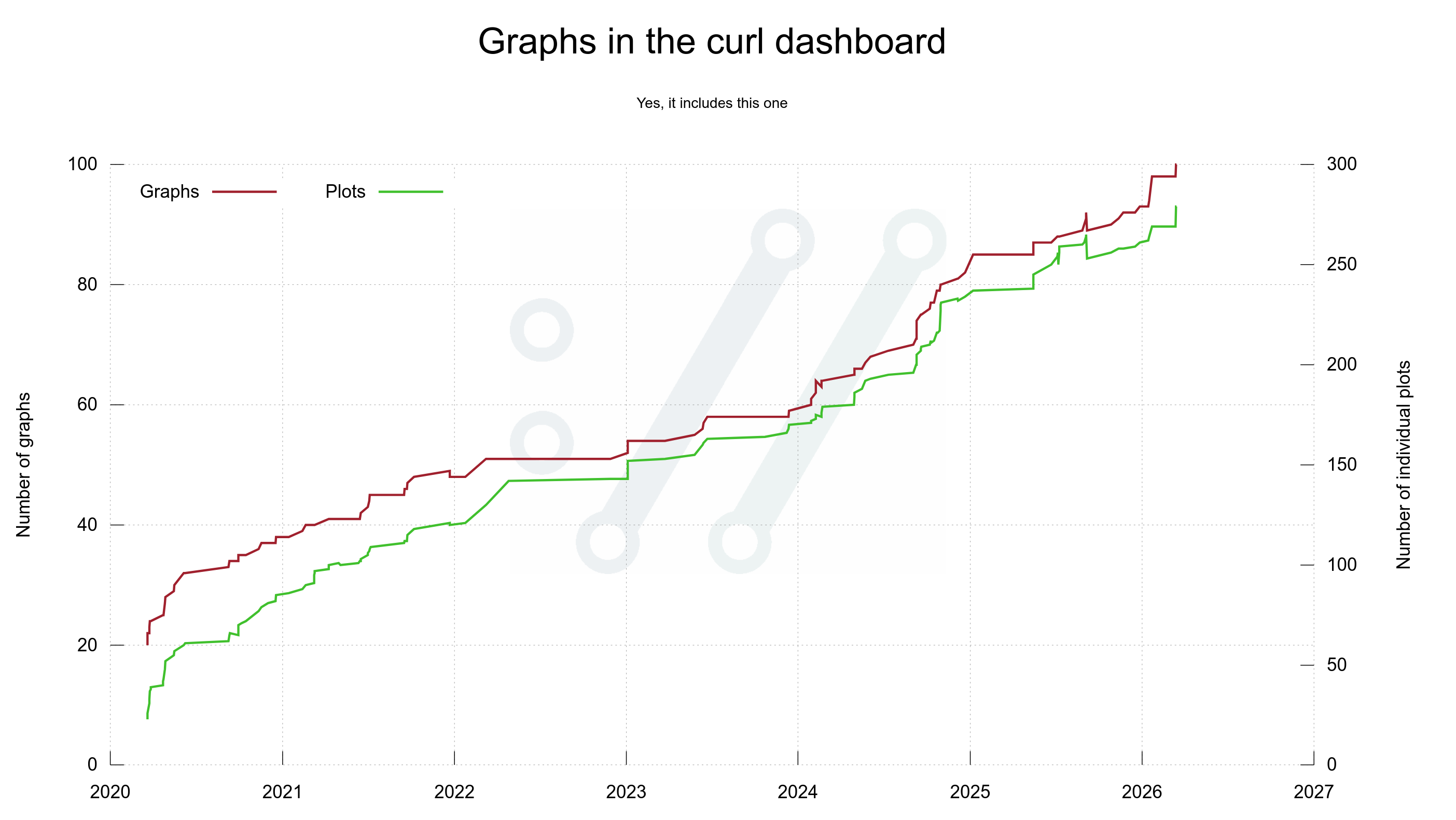
On March 20, 2020 the first version of the dashboard showed no less than twenty separate graphs. I refer to “a graph” as a separate image, possibly showing more than one plot/line/curve. That first dashboard version had twenty graphs using 23 individual plots.

Since then, we display daily updated graphs there.

The data

All data used for populating the graphs is open and available, and I happily use whatever is available:

  • git repository (source, tags, etc)
  • GitHub issues
  • mailing list archives
  • curl vulnerability data
  • hackerone reports
  • historic details from the curl past

Open and transparent as always.

Then it grew

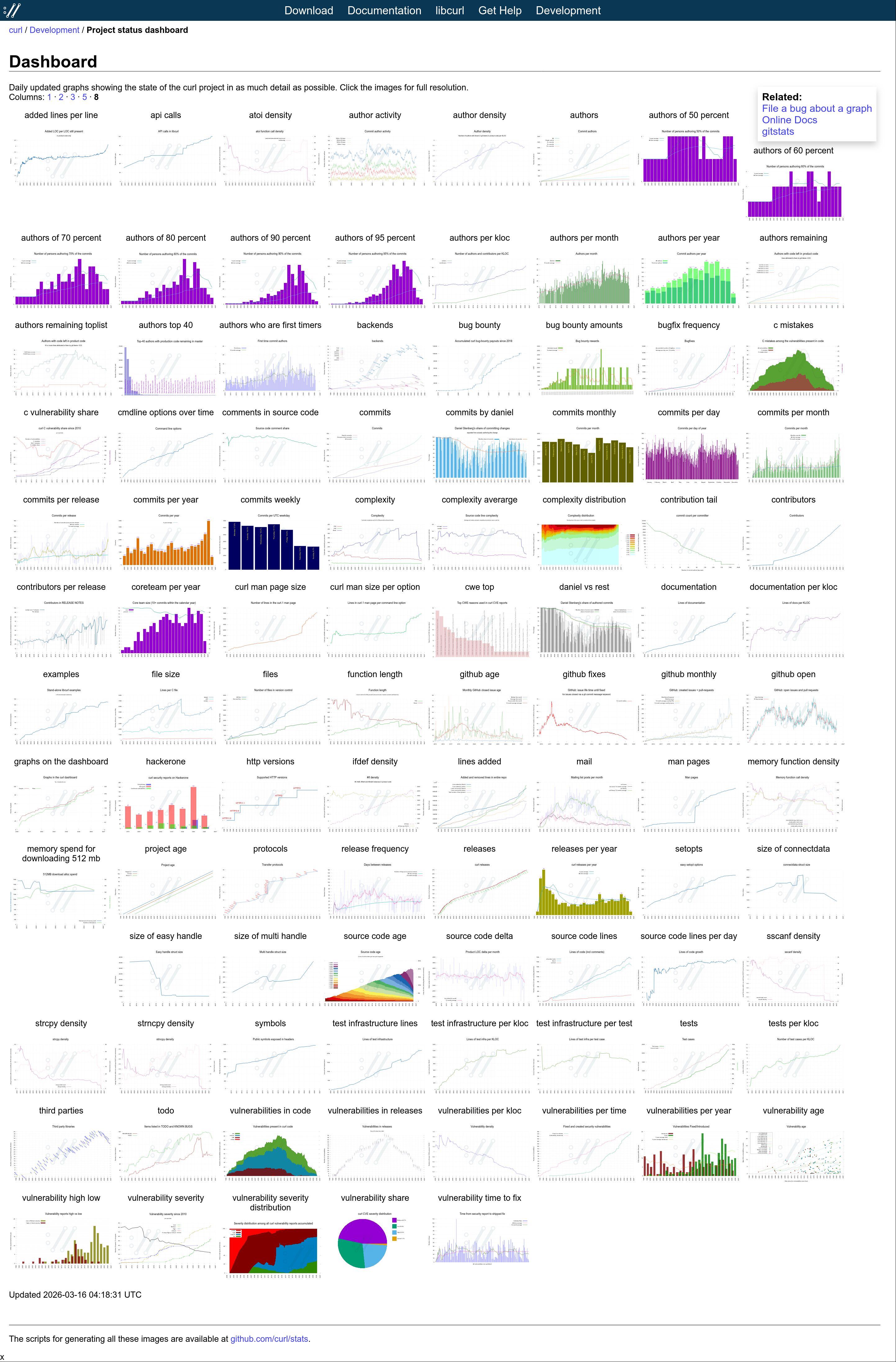
Every once in a while since then I get to think of something else in the project, the code, development, the git history, community, emails etc that could be fun or interesting to visualize and I add a graph or two more to the dashboard. Six years after its creation, the initial twenty images have grown to one hundred graphs including almost 300 individual plots.

Most of them show something relevant, while a few of them are in the more silly and fun category. It’s a mix.

Graph 100

The 100th graph was added on March 15, 2026 when I brought back the “vulnerable releases” graph (appearing on the site on March 16 for the first time). It shows the number of known vulnerabilities each past release has. I removed it previously because it became unreadable, but in this new edition I made it only show the label for every 4th release which makes it slightly less crowded than otherwise.

This day we also introduce a new 8-column display mode.

Custom but available

Many of the graphs are internal and curl specific of course. The scripts for this, and the entire dashboard, remain written specifically for curl and curl’s circumstances and data. They would need some massaging and tweaking in order to work for someone else.

All the scripts are of course open and available for everyone.

I used to also offer all the CSV files generated to render the graphs in an easy accessible form on the site, but this turned out to be work done for virtually no audience, so I removed that again. If you replace the .svg extension with .csv, you can still get most of the data – if you know.

Data is knowledge

The graphs and illustrations are not only silly and fun. They also help us see development from different angles and views, and they help us draw conclusions or at least try to. As an established and old project that makes an effort to do right, some of what we learn from this curl data might be possible to learn from and use even in other projects. Maybe even use as basis when we decide what to do next.

I personally have used these graphs in countless blog posts, Mastodon threads and public curl presentations. They help communicate curl development progress.

The jokes

On Mastodon I keep joking about me being a graphaholic and often when I have presented yet another graph added the collection, someone has asked the almost mandatory question: how about a graph over number of graphs on the dashboard?

Early on I wrote up such a script as well, to immediately fulfill that request. On March 14 2026, I decided to add it it as a permanent graph on the dashboard.

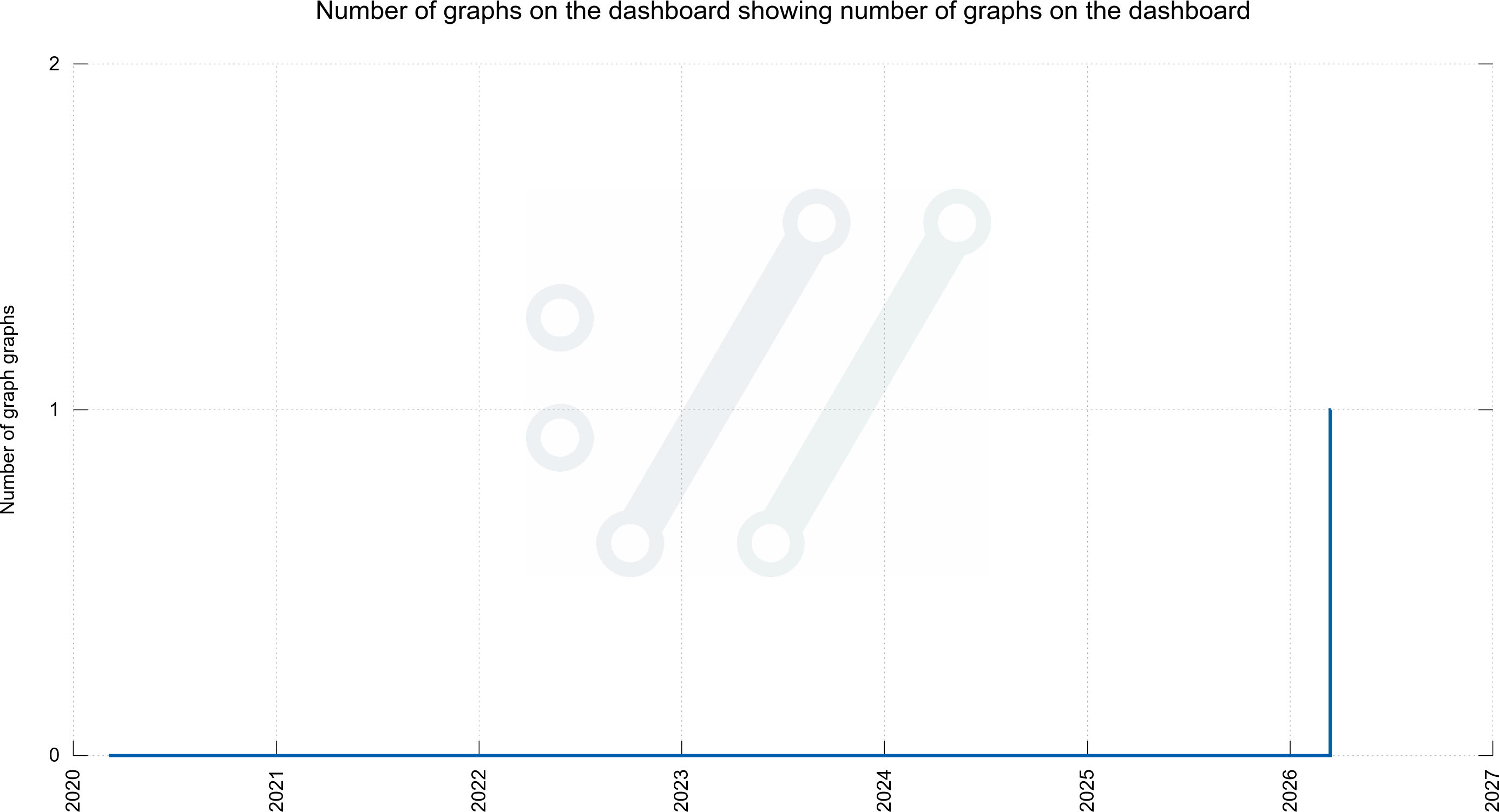
The next-level joke (although some would argue that this is not fun anymore) is then to ask me for a graph showing the number of graphs for graphs. As I aim to please, I have that as well. Although this is not on the dashboard:

More graphs

I am certain I (we?) will add more graphs over time. If you have good ideas for what source code or development details we should and could illustrate, please let me know.

Links

The git repository: https://github.com/curl/stats/

Daily updated curl dashboard: https://curl.se/dashboard.html

curl gitstats: https://curl.se/gitstats/

chicken nuget

Background: nuget.org is a Microsoft owned and run service that allows users to package software and upload it to nuget so that other users can download it. It is targeted for .Net developers but there is really no filter in what you can offer through their service.

Three years ago I reported on how nuget was hosting and providing ancient, outdated and insecure curl packages. Random people download a curl tarball, build curl and then upload it to nuget, and nuget then offers those curl builds to the world – forever.

To properly celebrate the three year anniversary of that blog post, I went back to nuget.org, entered curl into the search bar and took a look at the results.

I immediately found at least seven different packages where people were providing severely outdated curl versions. The most popular of those, rmt_curl, reports that it has been downloaded almost 100,000 times over the years and is still downloaded almost 1,000 times/week the last few weeks. It is still happening. The packages I reported three years ago are gone, but now there is a new set of equally bad ones. No lessons learned.

rmt_curl claims to provide curl 7.51.0, a version we shipped in November 2016. Right now it has 64 known vulnerabilities and we have done more than 9,000 documented bugfixes since then. No one in their right mind should ever download or use this version.

Conclusion: the state of nuget is just as sad now as it was three years ago and this triggered another someone is wrong on the internet moments for me. I felt I should do my duty and tell them. Again. Surely they will act this time! Surely they think of the security of their users?

Trusting randos

The entire nuget concept is setup and destined to end up like this: random users on the internet put something together, upload it to nuget and then the rest of the world downloads and uses those things – trusting that whatever the description says is accurate and well-meaning. Maybe there are some additional security scans done in the background, but I don’t see how anyone can know that they don’t contain any backdoors, trojans or other nasty deliberate attacks.

And whatever has been uploaded once seems to then be offered in perpetuity.

I reported this again

Like three years ago I listed a bunch of severely outdated curl packages in my report. nuget says I can email them a report, but that just sent me a bounce back saying they don’t accept email reports anymore. (Sigh, and yes I reported that as a separate issue.)

I was instead pointed over to the generic Microsoft security reporting page where there is not even any drop-down selection to use for “nuget” so I picked “.NET” instead when I submitted my report.

“This is not a Microsoft problem”

Almost identically to three years ago, my report was closed within less than 48 hours. It’s not a nuget problem they say.

Thank you again for submitting this report to the Microsoft Security Response Center (MSRC).

After careful investigation, this case has been assessed as not a vulnerability and does not meet Microsoft’s bar for immediate servicing. None of these packages are Microsoft owned, you will need to reach out directly to the owners to get patched versions published. Developers are responsible for removing their own packages or updating the dependencies.

In other words: they don’t think it’s nuget’s responsibility to keep the packages they host, secure and safe for their users. I should instead report these things individually to every outdated package provider, who if they cared, would have removed or updated these packages many years ago already.

Also, that would imply a never-ending wack-a-mole game for me since people obviously keep doing this. I think I have better things to do in my life.

Outdated efforts

In the cases I reported, the packages seem to be of the kind that once had the attention and energy by someone who kept them up-to-date with the curl releases for a while and then they stopped and since then the packages on nuget has just collected dust and gone stale.

Still, apparently users keep finding and downloading them, even if maybe not at terribly high numbers.

Thousands of fooled users per week is thousands too many.

How to address

The uploading users are perfectly allowed to do this, legally, and nuget is perfectly allowed to host these packages as per the curl license.

I don’t have a definite answer to what exactly nuget should do to address this problem once and for all, but as long as they allow packages uploaded nine years ago to still get downloaded today, it seems they are asking for this. They contribute and aid users getting tricked into downloading and using insecure software, and they are indifferent to it.

A rare few applications that were uploaded nine years ago might actually still be okay but those are extremely rare exceptions.

Conclusion

The last time I reported this nuget problem nothing happened on the issue until I tweeted about it. This time around, a well-known Microsoft developer (who shall remain nameless here) saw my Mastodon post about this topic when mirrored over to Bluesky and pushed for the case internally – but not even that helped.

The nuget management thinks this is okay.

If I were into puns I would probably call them chicken nuget for their unwillingness to fix this. Maybe just closing our eyes and pretending it doesn’t exist will just make it go away?

Absolutely no one should use nuget.

curl 8.19.0

Release presentation

Numbers

the 273rd release
8 changes
63 days (total: 10,712)
264 bugfixes (total: 13,640)
538 commits (total: 38,024)
0 new public libcurl function (total: 100)
0 new curl_easy_setopt() option (total: 308)
0 new curl command line option (total: 273)
77 contributors, 48 new (total: 3,619)
37 authors, 21 new (total: 1,451)
4 security fixes (total: 180)

Security

We stopped the bug-bounty but it has not stopped people from finding vulnerabilities in curl.

Changes

  • We stopped the bug-bounty. It’s worth repeating, even if it was no code change.
  • The cmake build got a CURL_BUILD_EVERYTHING option
  • Initial support for MQTTS was merged
  • curl now supports fractions for –limit-rate and –max-filesize
  • curl’s -J option now uses the redirect name as a backup
  • we no longer support OpenSSL-QUIC
  • on Windows, curl can now get built to use the native CA store by default
  • the minimum Windows version curl supports is now Vista (up from XP)

Pending removals

The following upcoming changes might be worth noticing. See the deprecate documentation for details.

  • NTLM support becomes opt-in
  • RTMP support is getting dropped
  • SMB support becomes opt-in
  • Support for c-ares versions before 1.16 goes away
  • Support for CMake 3.17 and earlier gets dropped
  • TLS-SRP support will be removed

Next

We plan to ship the next curl release on April 29. See you then!

Dependency tracking is hard

curl and libcurl are written in C. Rather low level components present in many software systems.

They are typically not part of any ecosystem at all. They’re just a tool and a library.

In lots of places on the web when you mention an Open Source project, you will also get the option to mention in which ecosystem it belongs. npm, go, rust, python etc. There are easily at least a dozen well-known and large ecosystems. curl is not part of any of those.

Recently there’s been a push for PURLs (Package URLs), for example when describing your specific package in a CVE. A package URL only works when the component is part of an ecosystem. curl is not. We can’t specify curl or libcurl using a PURL.

SBOM generators and related scanners use package managers to generate lists of used components and their dependencies. This makes these tools quite frequently just miss and ignore libcurl. It’s not listed by the package managers. It’s just in there, ready to be used. Like magic.

It is similarly hard for these tools to figure out that curl in turn also depends and uses other libraries. At build-time you select which – but as we in the curl project primarily just ships tarballs with source code we cannot tell anyone what dependencies their builds have. The additional libraries libcurl itself uses are all similarly outside of the standard ecosystems.

Part of the explanation for this is also that libcurl and curl are often shipped bundled with the operating system many times, or sometimes perceived to be part of the OS.

Most graphs, SBOM tools and dependency trackers therefore stop at the binding or system that uses curl or libcurl, but without including curl or libcurl. The layer above so to speak. This makes it hard to figure out exactly how many components and how much software is depending on libcurl.

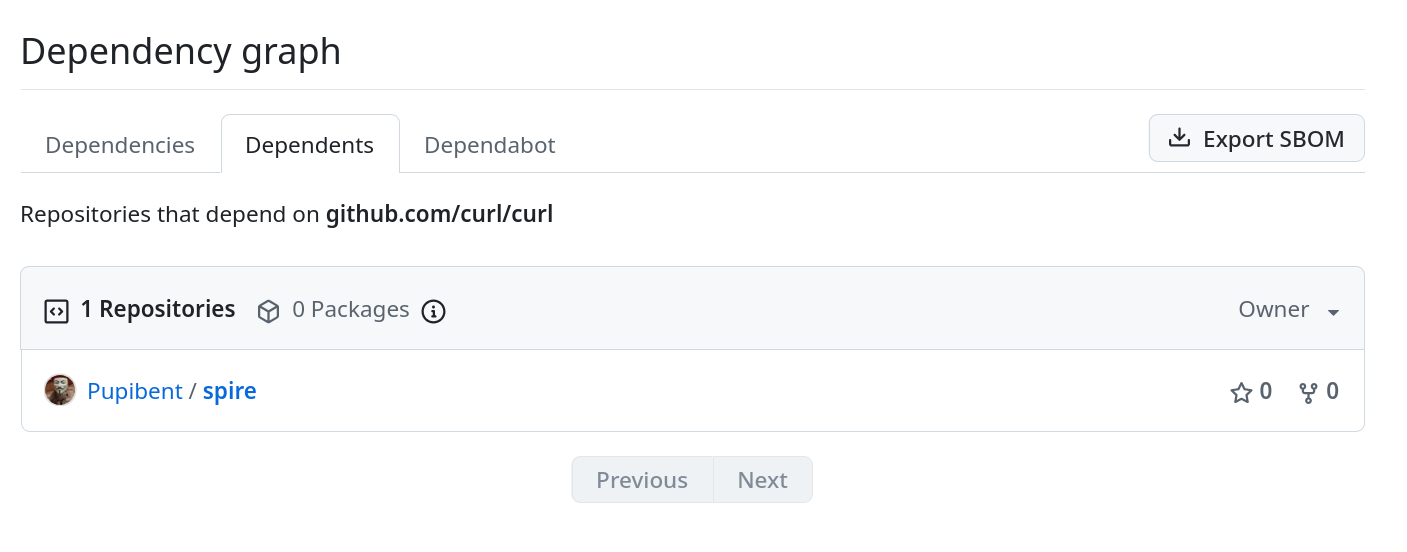
A perfect way to illustrate the problem is to check GitHub and see how many among its vast collection of many millions of repositories that depend on curl. After all, curl is installed in some thirty billion installations, so clearly it used a lot. (Most of them being libcurl of course.)

It lists one dependency for curl.

What makes this even more amusing is that it looks like this single dependent repository (Pupibent/spire) lists curl as a dependency by mistake.

10K curl downloads per year

The Linux Foundation, the organization that we want to love but that so often makes that a hard bargain, has created something they call “Insights” where they gather lots of metrics on Open Source projects.

I held back so I never blogged and taunted OpenSSF for their scorecard attempts that were always lame and misguided. This Insights thing looks like their next attempt to “grade” and “rate” Open Source. It is so flawed and full of questionable details that I decided there is no point in me listing them all in a blog post – it would just be too long and boring. Instead I will just focus on a single metric. The one that made me laugh out loud when I saw it.

Package downloads

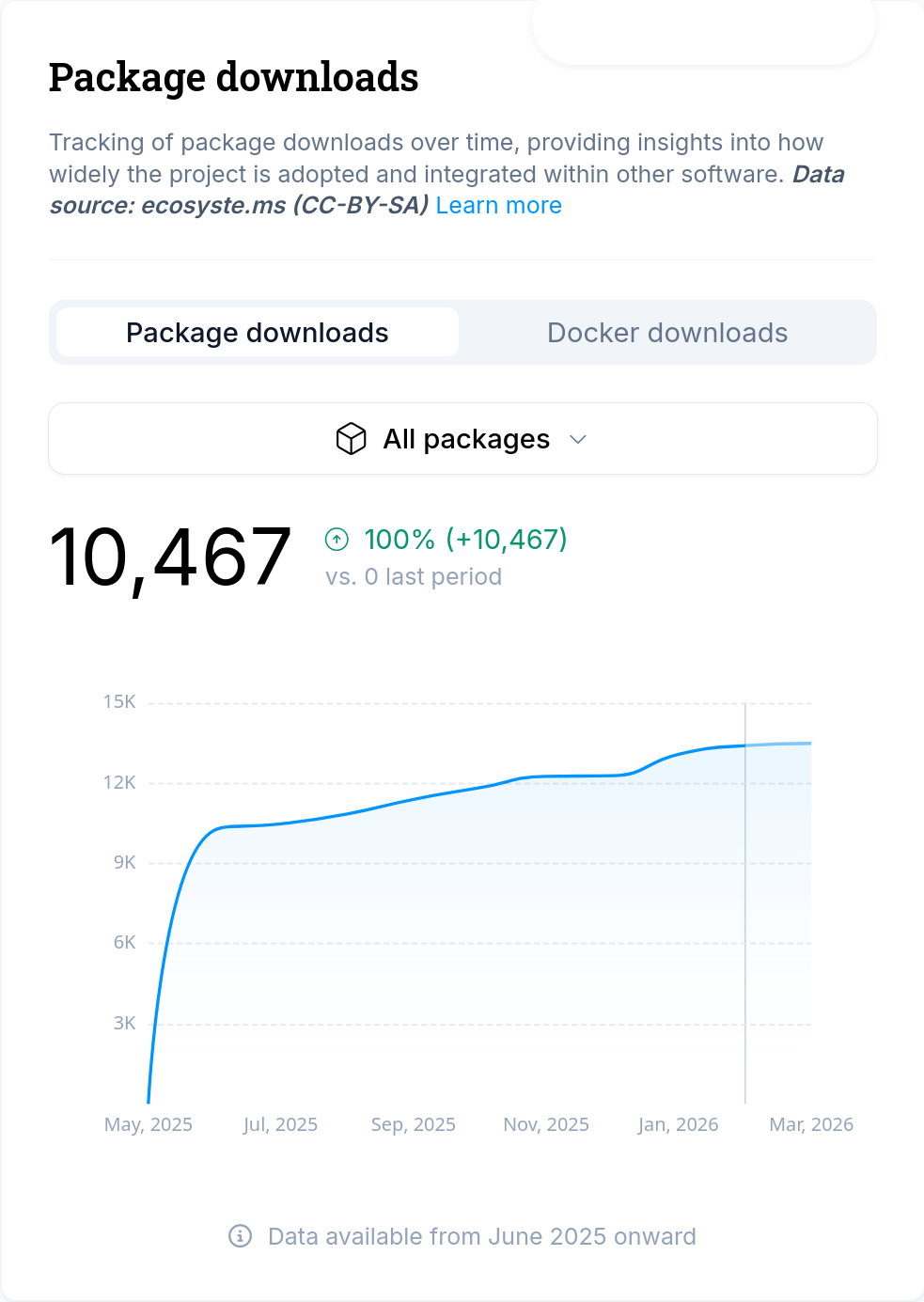
They claim curl was downloaded 10,467 times the last year. (source)

What does “a download” mean? They refer to statistics from ecosyste.ms, which is an awesome site and service, but it has absolutely no idea about curl downloads.

How often is curl “downloaded”?

curl release tarballs are downloaded from curl.se at a rate of roughly 250,000 / month.

curl images are currently pulled from docker at a rate of around 400,000 – 700,000 / day. curl is pulled from quay.io at roughly the same rate.

curl’s git repository is cloned roughly 32,000 times / day

curl is installed from Linux and BSD distributions at an unknown rate.

curl, in the form of libcurl, is bundled in countless applications, games, devices, cars, TVs, printers and services, and we cannot even guess how often it is downloaded as such an embedded component.

curl is installed by default on every Windows and macOS system since many years back.

But no, 10,467 they say.