Tag Archives: Open Source

source code survival rate

The curl project has its roots in the late 1996, but we haven’t kept track of all of the early code history. We imported our code to Sourceforge late 1999 and that’s how far back we can see in our current git repository. The exact date is “Wed Dec 29 14:20:26 UTC 1999”. So, almost 14 years of development.

Warning: this blog post contains more useless info and graphs than many mortals can handle. Be aware!

How much old code remain in the current source tree? Or perhaps put differently: how is the refresh rate of the code? We fix bugs, we change things, we add features. Surely we’ll slowly over time rewrite the old code and replace it with new more shiny and better working code? I decided to check this. Here’s what I found!

The tools

We have all code in git. ‘git blame’ is the primary tool I used as it lists all lines of all source code and tells us when it was added. I did some additional perl scripting around it.

The code

I decided to check all code in the src/ and lib/ directories in the curl and libcurl source tree. The source code is used to create both the curl tool and the libcurl library and back in 1999 there was no libcurl like today so we do get a slightly better coverage of history this way.

In total this sums up to some 112000 lines in the current .c and .h files.

To count the total amount of commits done to those specific files through history I ran:

git log --oneline src/*.[ch] lib/*.[ch] | wc -l

6047 commits in total. (if I don’t specify the files and count all commits in the repo it ends up at 16954)

git stats

We run gitstats on the curl repo every day so you can go there for some more and current stats. Right now it tells us that average number of commits is 4.7 per active day (that means days when actually something was committed), or 3.4 per all days over the entire time. There was git activity 3576 days in total. By 224 authors.

Surviving commits

How much of the code would you think still remains that were present already that December day 1999?

How much of the code in the current code base would you think was written the last few years?

Commit vs Author vs Date

I wanted to see how much old code that exists, or perhaps how the age of the code is represented in the current code base. I decided to therefore base my logic on the author time that git tracks. It is basically the time when the author of a change commits it to his/her local tree as then the change can be applied later on by a committer that can be someone else, but the author time remains the same. Sometimes a committer commits multiple patches at once, possibly at a much later time etc so I figured the author time would be a better time stamp. I also decided to track the date instead of just the commit hash so that I can sort the changes properly and also make interesting graphs that are based on that time. I use the time with a second precision so changes done a second apart will be recorded as two separate changes while two commits done with the same author time stamp will be counted as the same time.

I had my script run ‘git blame –line-porcelain’ for all files and had my script sum up all changes done on the same time.

Some totals

The code base contains changes written at 4147 different times. Converted to UTC times, they happened on 2076 unique days. On 167 unique months. That’s every month since the beginning.

We’re talking about 312 files.

Number of lines changed over time

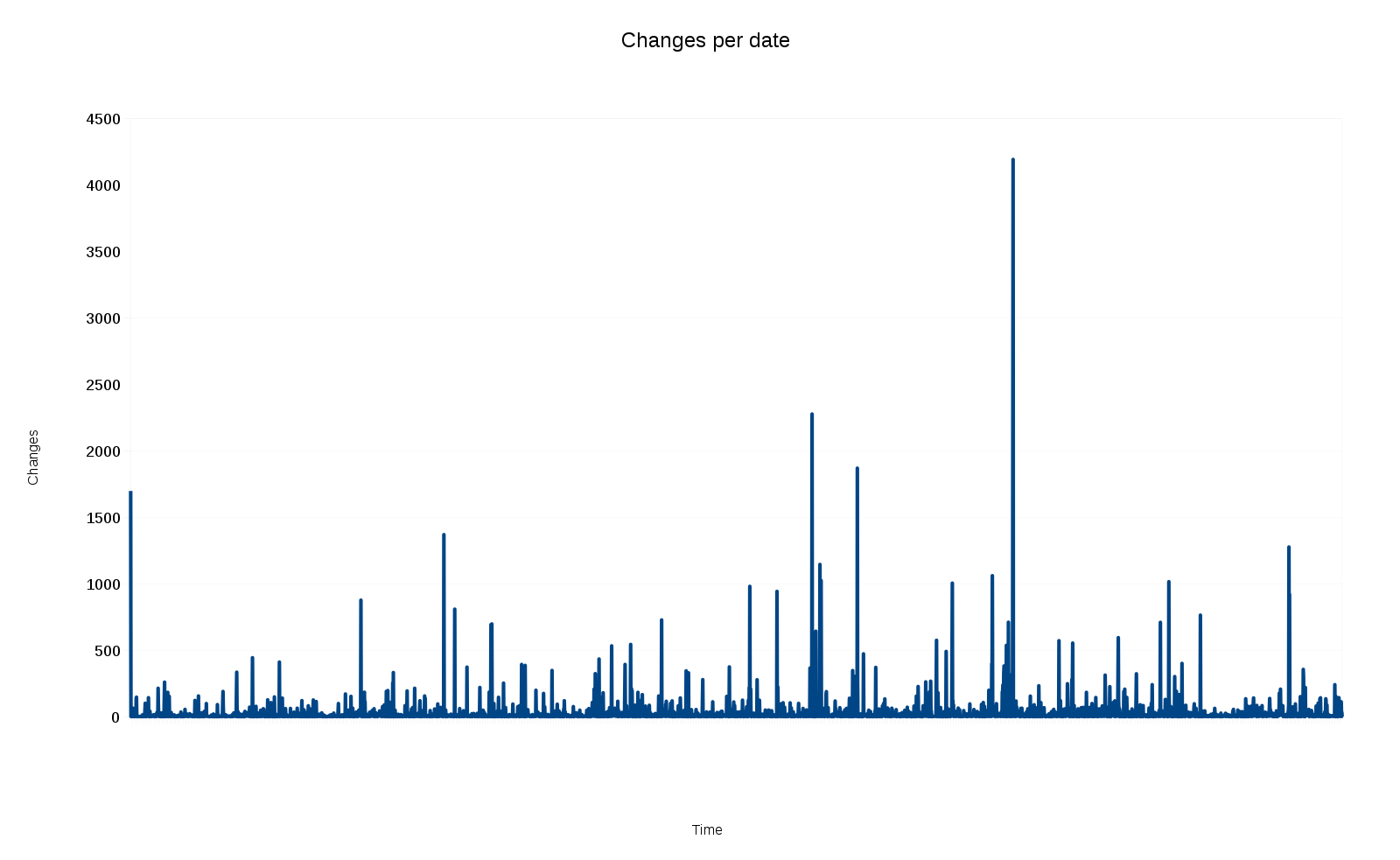
A graph with changes over time. The Y axis is number of lines that were changed on that particular time. (click for higher res)

Lines changed over time

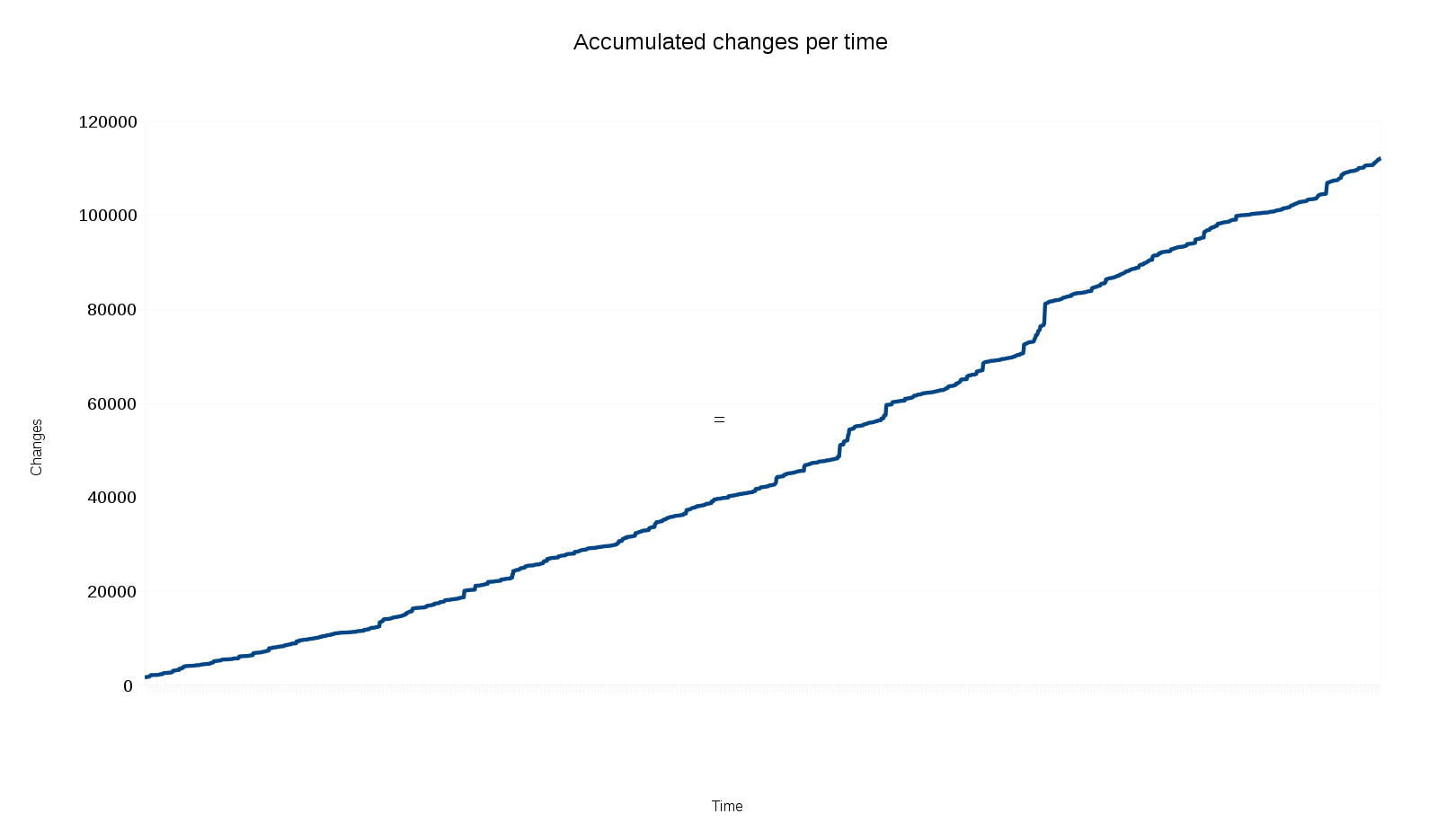
Ok you object, that doesn’t look very appealing. So here’s the same data but with all the changes accumulated over time.

accumulated

Do you think the same as I do? Isn’t it strangely linear? It seems that the number of added lines that remain in the code today is virtually the same over time! But fair enough, the changes in the X axis are not distributed according to the time/date they represent so we shouldn’t be fooled by the time, but certainly we can see that changes in general only bring in a certain amount of surviving modified lines.

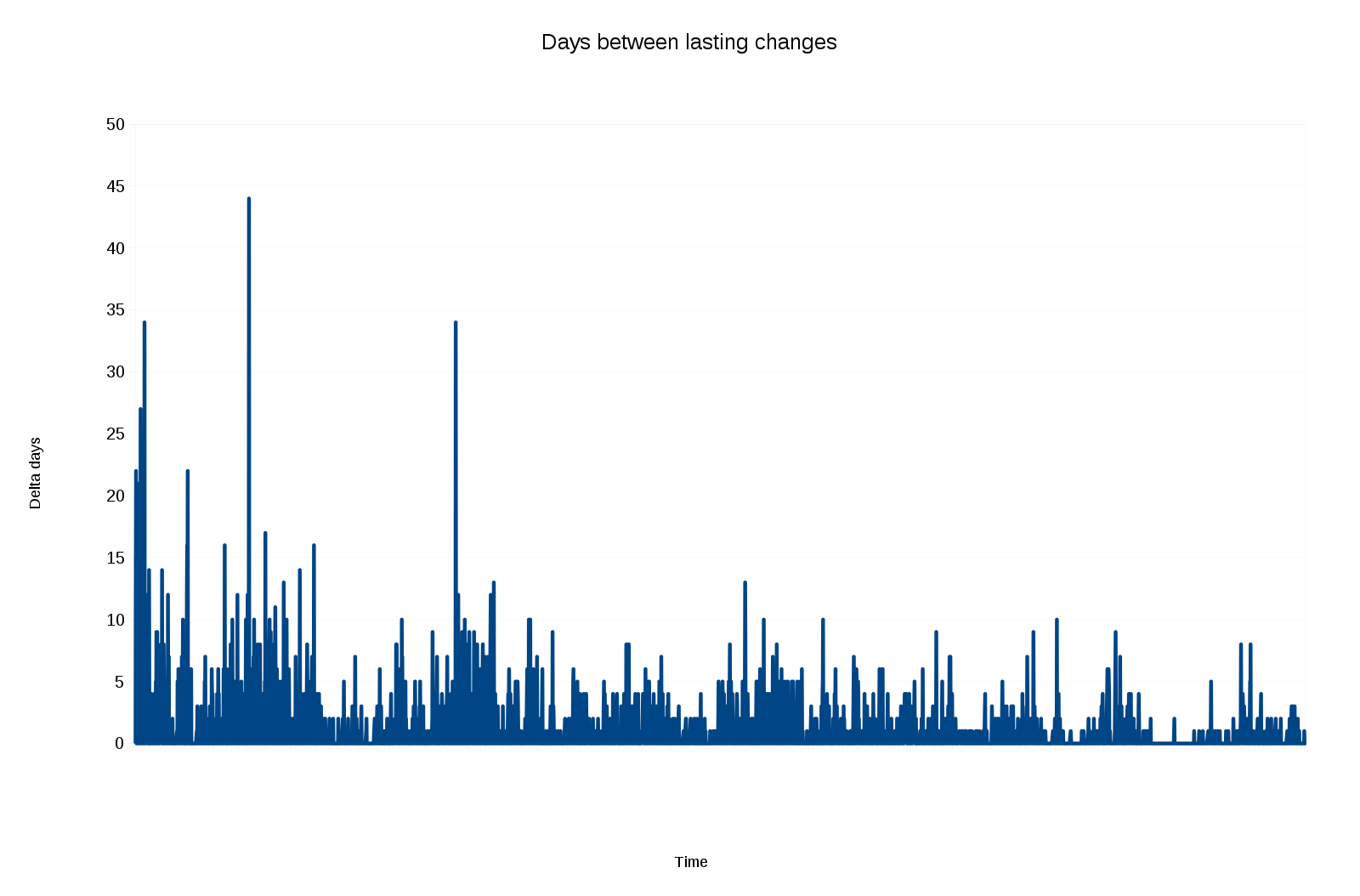
Another way to count the changes is then to check all the ~4000 change times of the present code, and see how many days between them there are:

delta

Ah, now finally we’re seeing something. Older code that is still present clearly was made with longer periods in between the changes that have lasted. It makes perfect sense to me, since the many years of development probably have later overwritten a lot of code that was written in between.

Also, it is clearly that among the more recent changes that have survived they were often done on the same day or just a few days away from another lasting change.

Grouped on date ranges

The number of modified lines split up on the individual year the change came in.

year

Interesting! The general trend is clear and not surprising. Two years stand out from the trend, 2004 and 2011. I have not yet investigated what particular larger changes that were made those years that have survived. The bump for 1999 is simply the original import and most of those lines are preprocessor lines like #ifdef and #include or just opening and closing braces { and }.

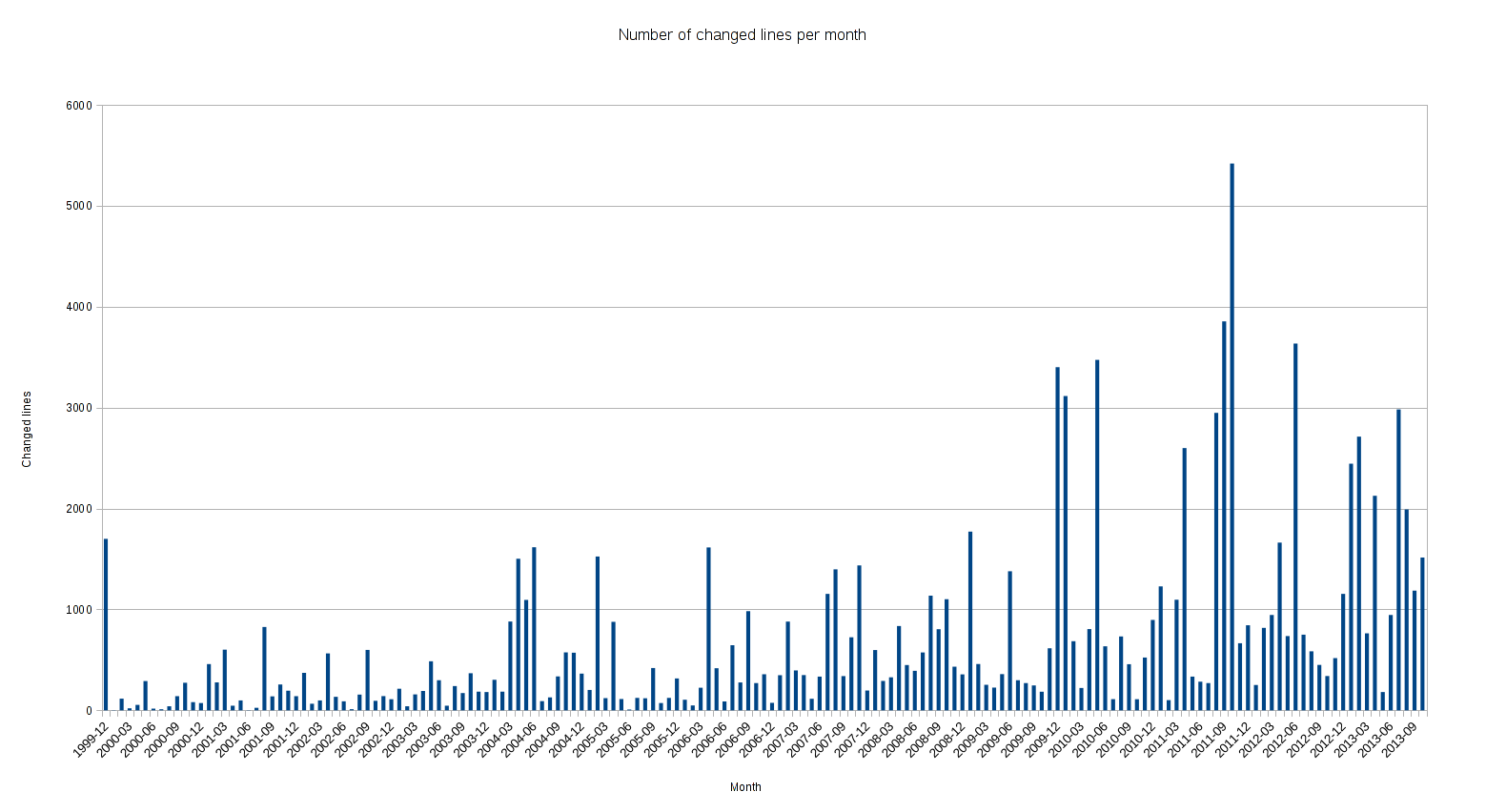
Splitting up the number of surviving lines on the specific year+month they were added:

month

This helps us analyze the previous chart. As we can see, the rather tall bars from 2004 and 2011 are actually several months wide and explains the bumps in the year-chart. Clearly we made some larger effort on those periods that were good enough to still remain in the code.

Correlate to added or removed lines?

So, can we perhaps see if some years’ more activity in number of added or removed source lines can be tracked back to explain the number of surviving source code lines? I ran “git diff [hash1]..[hash2] –stat — lib/*.[ch] src/*.[ch]” for all years to get a summary of number of added and removed source code lines that year. I added those number to the table with surviving lines and then I made another graph:

year-again

Funnily enough, we see almost an exact correlation there for the first eight years and then the pattern breaks. From the year 2009 the number of removed lines went down but still the amount of surving lines went up quite a bit and then the graphs jump around a bit.

My interpretation of this graph is this boring: the amount of surviving code in absolute numbers is clearly correlating to the amount of added code. And that we removed more code yearly in the 2000-2003 period than what has survived.

But notice how the blue line is closing the gap to the orange/red one over time, which means that percentage wise there’s more surviving code in more recent code! How much?

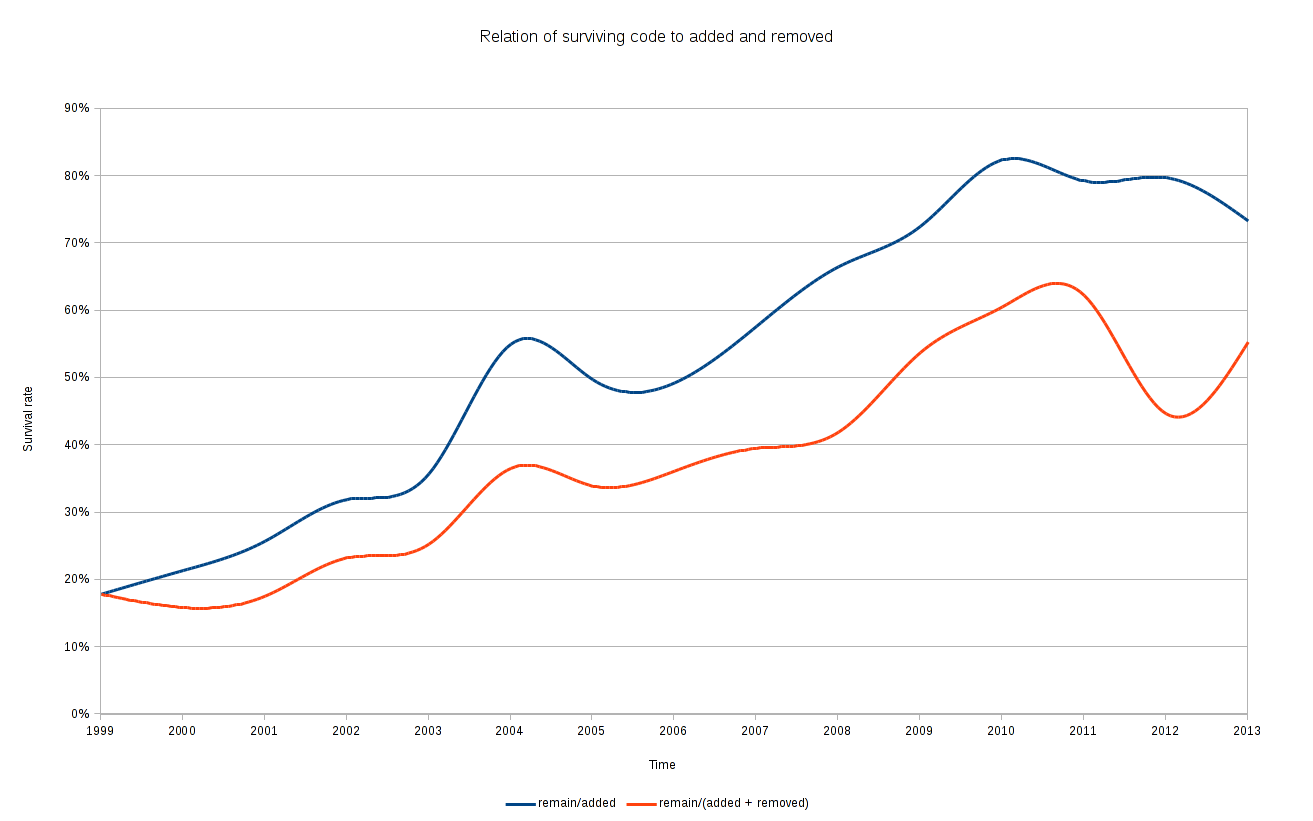
Here’s the amount of surviving lines/added lines and a second graph looking at surviving lines/(added + removed) to see if the mere source code activity would be a more suitable factor to compare against…

relation survival vs added and removed lines

Code committed within the last 5 years are basically 75% left but then it goes downhill down to the 18% survival rate of the 1999 code import.

If you can think of other good info to dig out, let me know!

1999,1699
2000,1115
2001,3061
2002,2432
2003,2578
2004,7644
2005,4016
2006,5101
2007,7665
2008,7292
2009,9460
2010,11762
2011,19642
2012,11842
2013,16844

he forked off libgnurl

Everyone and anyone is of course entitled to fork a project that is released under an open source license. This goes for my projects as well and I don’t mind it. Go ahead.

I think it may be a bit shortsighted and a stupid decision, but open source allows this and it sometimes actually leads to goodness.

libgnurl

Enter libgnurl. A libcurl fork created by Christian Grothoff.

For most applications, the more obscure protocols supported by cURL are close to dead code — mostly harmless, but not useful

<sarcasm>Of course a libcurl newcomer such Christian knows exactly what “most applications” want and need and thus what’s useful to them….</sarcasm>

cURL supports a bunch of crypto backends. In practice, only the OpenSSL, NSS (RedHat) and GnuTLS (Debian) variants seem to see widespread deployment

Originally he mentioned only OpenSSL and GnuTLS there until someone pointed out the massive amount of NSS users and then the page got updated. Quite telling I think. Lots of windows users these days use the schannel backend, Mac OS X users use the darwinssl backend and so on. Again statements based on his view and opinions and most probably without any closer checks done or even attempted.

As a side-node we could discuss what importance (perceived) “widespread deployment” has when selecting what to support or not, but let’s save that for another blog post a rainy day.

there exist examples of code that deadlocks on IPC if cURL is linked against OpenSSL while it works fine with GnuTLS

I can’t argue against something I don’t know about. I’m not aware of any bug reports on something like this. libcurl is not fully SSL layer agnostic, the SSL library choice “leaks” through to applications so yes an application can very well be written to be “forced” to use a libcurl built against a particular backend. That doesn’t seem what he’s complaining about here though.

Thus, application developers have to pray that the cURL version deployed by the distribution is compatible with their needs

Application developers that use a library – any library – surely always hope that it is compatible with their needs!?

it is also rather difficult to replace cURL for normal users if cURL is compiled in the wrong way

Is it really? As most autotools based projects, you just run configure –prefix=blablalba and install a separate build in a customer directory and then use that for your special-need projects. I suppose he means something else. I don’t know what.

For GNUnet, we need a modern version of GnuTLS. How modern? Well, while I write this, it hasn’t been released yet (update: the release has now happened, the GnuTLS guys are fast). So what happens if one tries to link cURL against this version of GnuTLS?

To verify his claims that building against the most recent gnutls is tricky, I tried:

  1. download 3.2.5 tarball
  2. unpack it
  3. configure –prefix=$HOME/build-gnutls-3.2.5
  4. make
  5. make install
  6. cd [curl source tree]
  7. configure –without-ssl –with-gnutls=$HOME/build-gnutls-3.2.5 [and some more options if wanted]
  8. make
  9. invoke “./src/curl -V” to verify that the build is using the latest. Yes it does. Case closed.

How does forking fix it? Easy. First, we can get rid of all of the compatibility issues

That’s of course hard to argue with. If you introduce a brand new library it won’t have any compatibility issues since nobody used it before. Kind of shortsighted solution though, since as soon as someone starts to use it then compatibility becomes something to pay attention to.

Also, since Christian is talking about doing some changes to accomplish this new grand state, I suspect he will do this by breaking compatibility with libcurl in some aspects and then gnurl won’t be libcurl compatible so it will no longer be that easy to switch between them as desired.

Note that this pretty much CANNOT be done without a fork, as renaming is an essential part of the fix.

Is renaming the produced library really that hard to do without forking the project? If I want to produce a renamed output from an open source project out there, I apply a script or hack the makefile of that project and I keep that script or diff in my end. No fork needed. I think I must’ve misunderstood some subtle angle of this…

Now, there might be creative solutions to achieve the same thing within the standard cURL build system, but I’m not happy to wait for a decade for Daniel to review the patches.

Why would he need to send me such patches in the first place? Why would I have to review the patches? Why would we merge them?

That final paragraph is probably the most telling of his entire page. I think he did this entire fork because he is unhappy with the lack of speed in the reviewing and responses to his patches he sent to the libcurl mailing list. He’s publicly complained and whined about it several times. A very hostile attitude to actually get the help or review you want.

I want to note that the main motivations for this fork are technical

Yes sure, they are technical but also based on misunderstandings and just lack of will.

But I like to stress again that I don’t mind the fork. I just mind the misinformation and the statements made as if they were true and facts and represents what we stand for in the actual curl project.

I believe in collaboration. I try to review patches and provide feedback as soon as I can. I wish Christian every success with gnurl.

Don’t email me

Why I insist on people to keep issues on the mailing list(s)

A recent twitter discussion I had with Andrei Neculau contributed to his blog post on this subject, basically arguing that I’m wrong but with many words and explanations.

It triggered me to write up my primary reasons for why I strongly object to handle open source issues, questions and patches privately (for free) in open source projects that I have a leading role in.

1. I spend a considerable amount of my spare time on open source projects. I devote some 15-20 unpaid hours a week for those communities. By emailing me and insisting on a PRIVATE conversation you’re suddenly yanking the mutex flag and you’re now requesting that I spend parts of this time on YOU ALONE and not the rest of the community. That’s selfish.

2. By insisting on a private conversation you FORCE me to repeat myself since ideas and questions are rarely unique or done for the first time. So you have a problem or a question that’s very similar to one I just responded to. And the next person will ask the same one tomorrow. By insisting on doing them in public already in the first email, already the second person can read it without me having to write it twice. And the third person who didn’t even realize he was interested in that topic will find out and read it as well (either now when the mail gets sent out or even years later when that user find the archived mailing list on the web). Private emails deny that ability. That’s selfish.

3. By emailing me privately and asking questions and help, you assume that I am the single best person to ask this question at this given time. What if I happen to be on vacation, be under a rough period at work or just not know the particular area of the project very good. I may be the leader or a public person of a project, but I may still not know much about feature X for operating system Z about which you ask. Ask on the list at once and you’ll reach the correct person. That’s more efficient.

4. By emailing me privately, you indirectly put a load on me to reply – or to get off as a rude person. Yes you’re friendly and you ask me nicely and yet even after you remind me after a few days I STILL DON’T RESPOND. Even if I just worked five 16-hour work days and you asked questions I don’t know the answer to… That’s inefficient and rude.

5. Yes, you can say that subscribing to an email list can be daunting and flood you with hundreds or thousands of emails per month – that’s completely true. But if you only wanted to send that single question or submit the single issue, then you can unsubscribe again quite soon and escape most of that load. Then YOU do the work instead of demanding someone else to do it for you. When you want to handle a SINGLE issue, it is much better load balancing if you do the extra work and the people who do tens or HUNDREDS of issues per month in the project do less work per issue.

6. You’re suggesting that I could forward the private question to the mailing list? Yes I can, but then I need to first ask for permission to do so (or be a jerk) and if the person who sent me the mail is going to send me another mail anyway, (s)he can just as well spend that time to send the first mail to the list instead of say YES to me and then make me do his or hers work. It’s just more efficient. Also, forwarded questions tend to end up so that replies and follow-up questions don’t find their way back to the original poster and that’s bad.

7. I propose and use different lists for different purposes to ease the problem with too many (uninteresting) emails.

Meet Haxx at FOSDEM 2013

Keeping up with our fine tradition, we will be present at that huge open source conference called FOSDEM in Brussels Belgium at the beginning of February 2013. It will then become our… 4th (?) visit there. I don’t have any talk planned yet, but possibly I’ll suggest something later.

Fosdem is several thousand open source geeks in a massive scale conference with something like twenty different parallel tracks, where each room basically is organized and planned independently. There’s no registration and no entrance fee. I usually enjoy network and security related rooms and of course the embedded room, which unfortunately seems to be stuck in a very large room of the campus with the worst sound system and audio conditions…

I look forward to meet friends there and have a great time with open source talks and good Belgian beers at night! If you’ll be there too, let us know and we can meet up.

fosdem

Embedded Linux hacking day

eneaOn September 10th, I sent out the invite to the foss-sthlm community for an embedded hacking event just before lunch. In just four hours, the 40 available tickets had been claimed and the waiting list started to get filled up as well… I later increased the amount to 46, we had some cancellations and I handed out more tickets and we had 46 people signed up at the day of the event (I believe 3 of these didn’t show up). At the day the event started, we still had another 20 people in the waiting list with hopes of getting a spot!

(All photos in this post are scaled down versions, click the picture to see a slightly higher resolution version!)

In Enea we had found an excellent sponsor for this event. They provided the place, the food, the raspberry pis, the coffe, the tshirts, the infrastructure and everything else that had to be there to make it an awesome day.
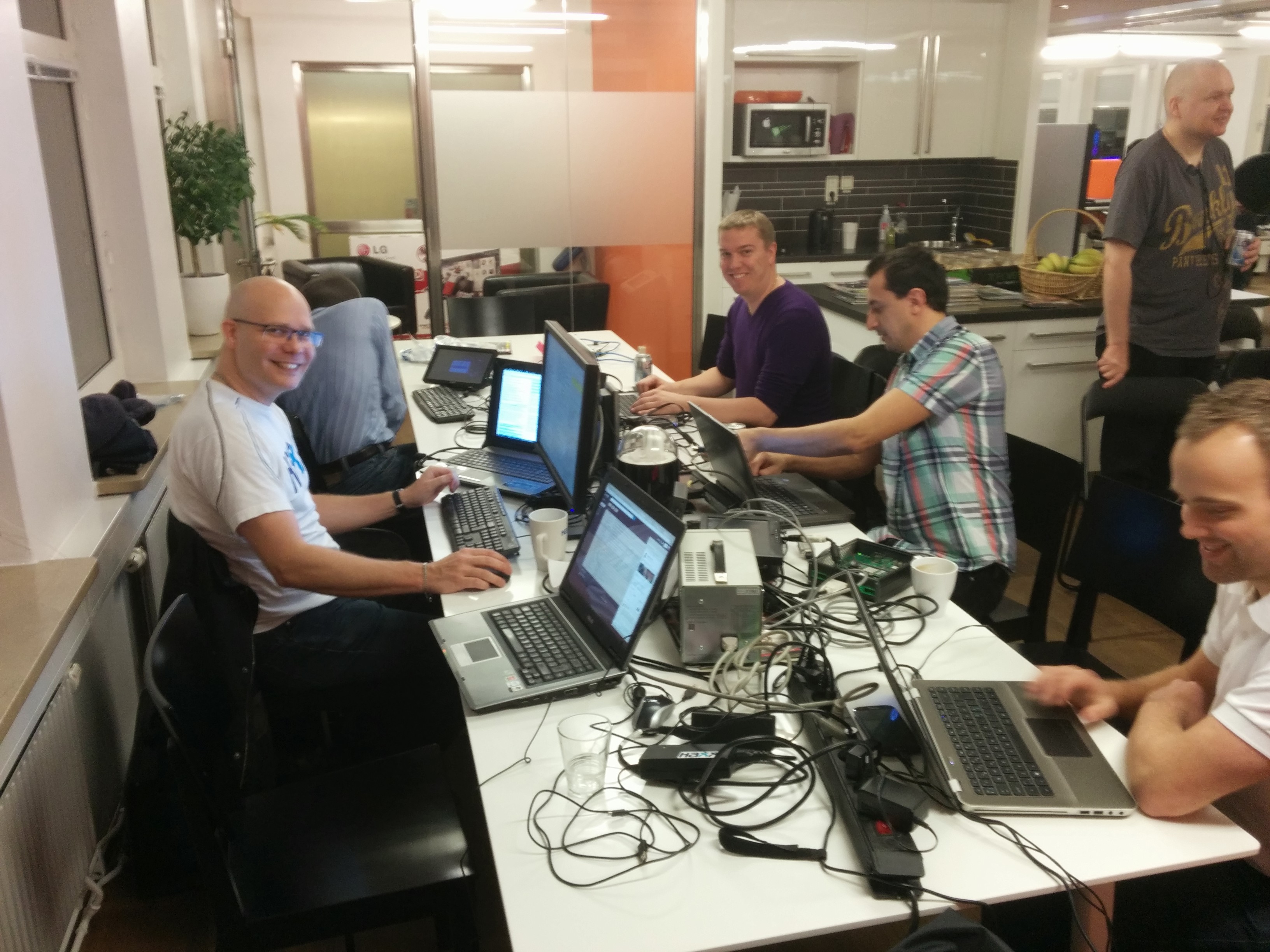
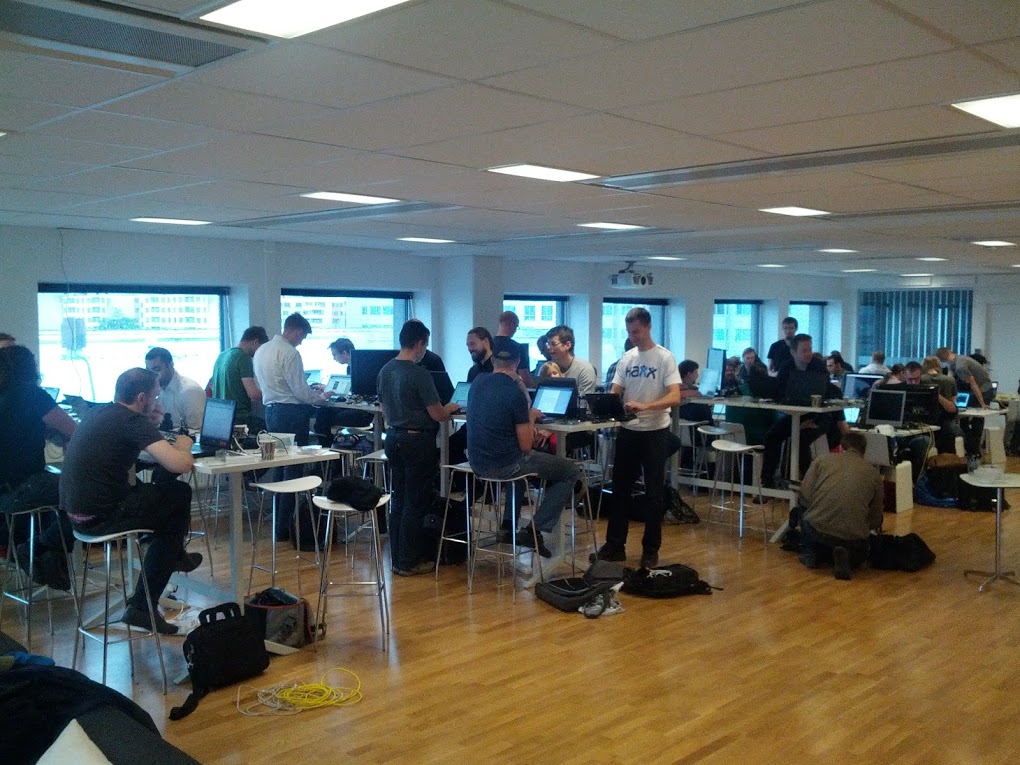
the-roomWe started off the event at 10:00 on October 20 in the Enea offices in Kista, Stockholm Sweden. People dropped in one by one and were handed their welcome present containing a raspberry pi board, a 2GB SD card and a USB-to-serial cable to interface/power the board with. People then found their seats in the room.

There were fruit, candy, water and coffee to start off and keep the mood high. We experienced some initial wifi and internet access problems but luckily we had no less than two dedicated Enea IT support people present and they could swiftly fix the little hiccups that occurred.

coffee machines

Once everyone seemed to have landed, I welcomed everyone and just gave a short overview of what to expect from the day, where the toilets are and so on.

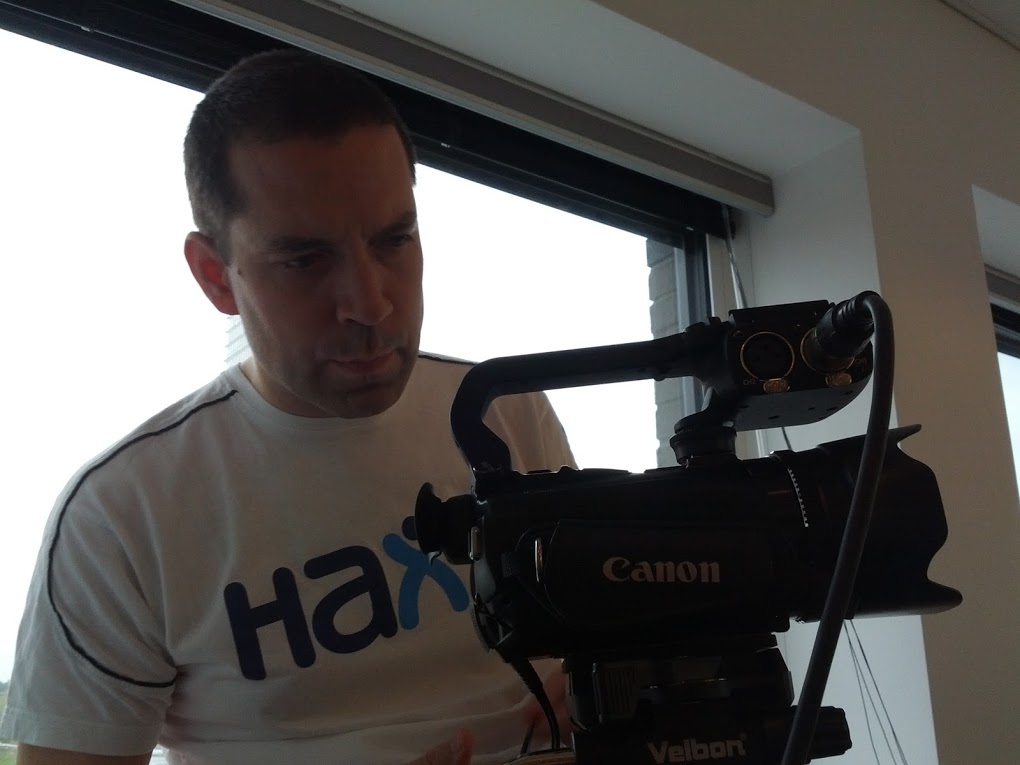
In order to try to please everyone who couldn’t be with us at this event, due to plans or due to simply not having got one of the attractive 40 “tickets”, Björn the cameramanEnea helped us arrange a video camera which we used during the entire day to film all talks and the contest. I can’t promise any delivery time for them but I’ll work on getting them made public as soon as possible. I’ll make a separate blog post when there’s something to see. (All talks were in Swedish!)

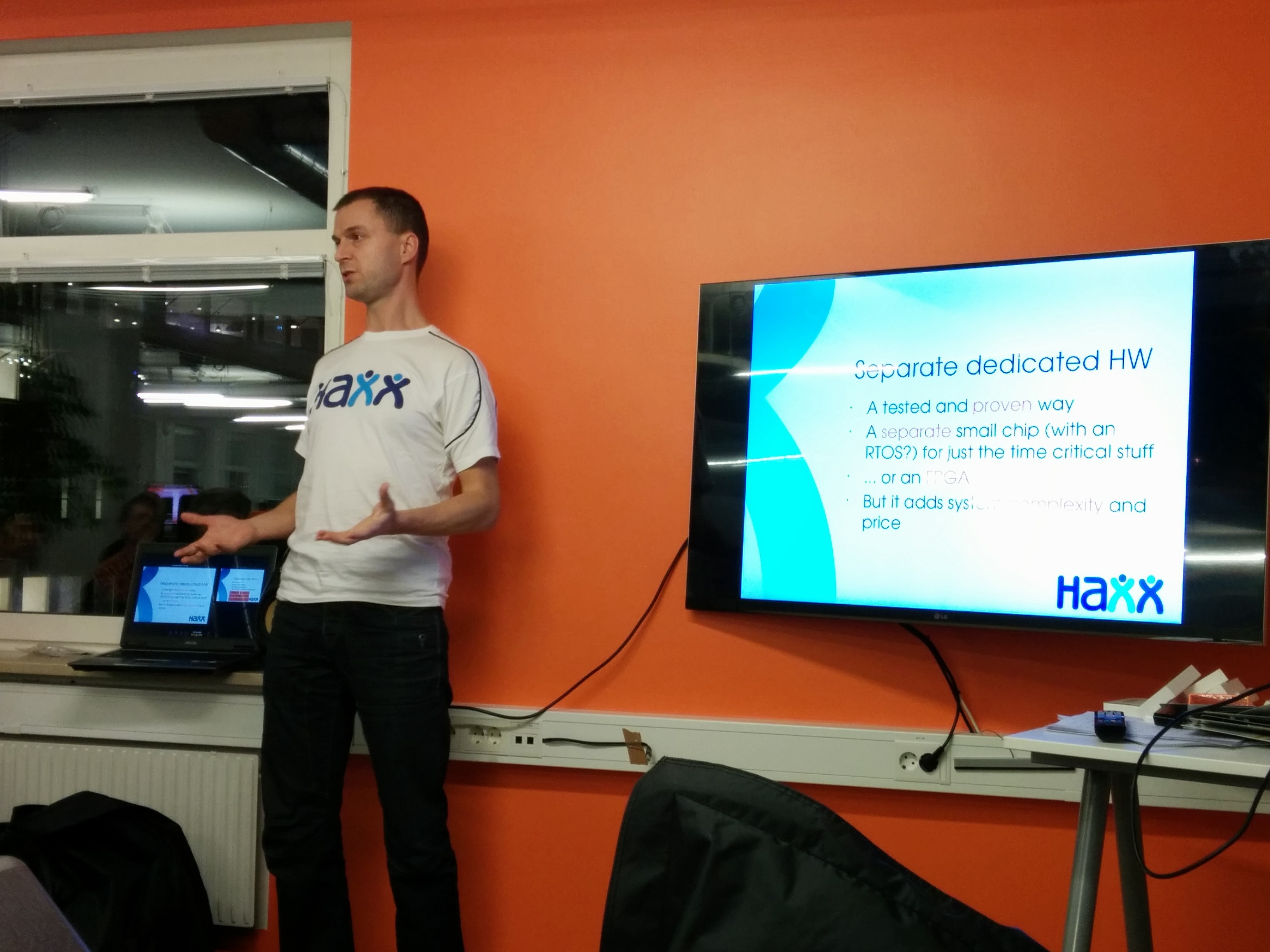
At 11:30 I started off the day for real by holding the first presentation. We used one of the conference rooms for this, just next to the big room where everyone say hacking. This day we had removed all tables and only had chairs in the room movie theater style and it turned out we could fit just about all attendees in the room this way. I think that was good as I think almost everyone sat down to hear and see me:

Open Source in Embedded Systems
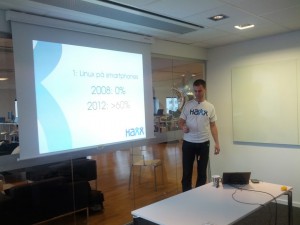
daniel talks open source I did a rather non-technical talk about a couple of trends in the embedded operating systems market and how I see the upcoming future and then some additional numbers etc. The full presentation (with most of the text in Swedish) can be found on slideshare.

I got good questions and I think it turned out an interesting discussion on how things run and work these days.

After my talk (which I of course did longer than planned) we served lunch. Three different sallads, bread and stuff were brought out. Several people approached me to say how they appreciated the food so I must say that Enea managed really well on that account too!

Development and trends in multicore CPUs
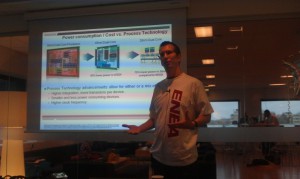
jonas talks about CPUs
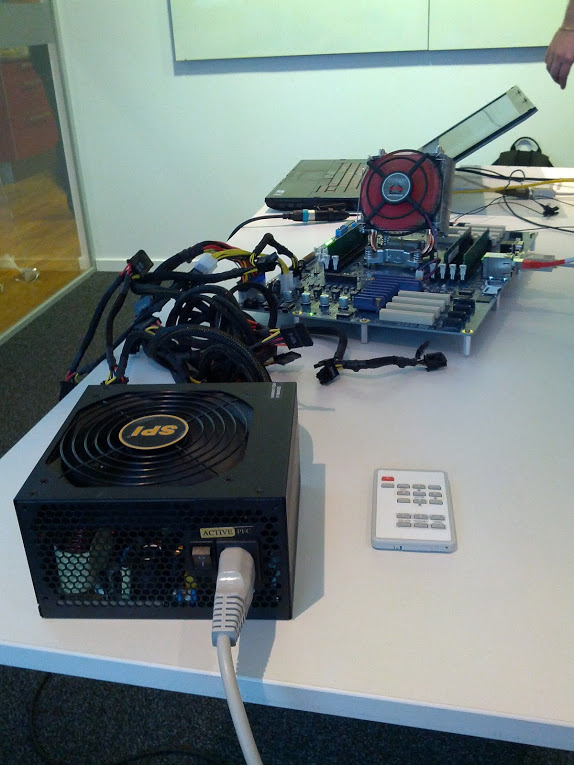
Jonas Svennebring from Freescale was up next and talked about current multicore CPU development trends and what the challenges are for the manufacturers are today. It was a very good and very technical talk and he topped it off by showing off his board with T4240 running, Freecale’s latest flagship chip that is just now about to become available for companies outside of Freescale.
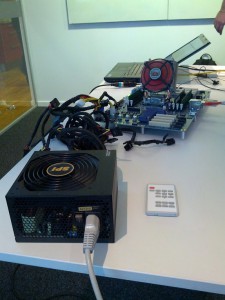
T4240 from FreeescaleOn this photo on the left you see the power supply in the foreground and the ATX board with a huge fan and cooler on top of the actual T4240 chip.

T4240 is claimed to have a new world record in coremark performance, features 12 hyper-threaded ppc cores in up to 1.8GHz.

There were some good questions to Jonas and he delivered good and well thought out answers. Then people walked out in the big room again to continue getting some actual hacking done.

We then took the opportunity to hand out the very nice-looking tshirts to all attendees, again kindly done so by Enea.

The Contest

The next interruption was the contest. Designed entirely by me to allow everyone to participate, even my friends and Enea employees etc. On the photo on the right you can see I now wear the tshirt of the day.
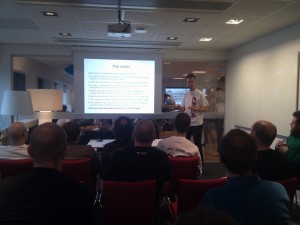
the contest
The contest was hard. I knew it was hard as I wanted it really make it a race that was only for the ones who really get embedded linux and have their brain laid out properly!

I posted the entire contest in separate blog post, but the gist of it was that I presented 16 questions with 3 answer alternatives. Each alternative had a sequence of letters. So after 16 questions you had 16 letter sequences you had to put in the right order to get a 17th question. The first one to give a correct answer to that 17th question would win.

A whole bunch of people gave up immediately but there was a core group who really fought hard, long and bravely and in the end we got a winner. The winner had paired up so the bottle of champagne went jointly to Klas and Jonas. It was a very close call as others were within seconds of figuring it out too.

I think the competition was harder than I thought. Possibly a little too hard…

Your own code on others’ hardware
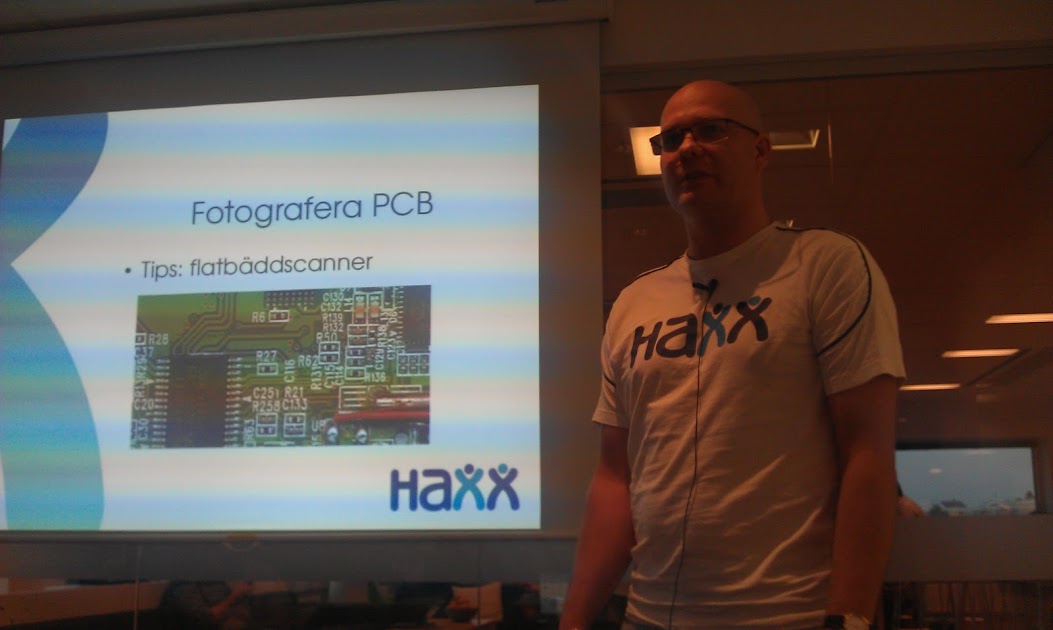
linus talksLinus from Haxx (who shouldn’t be much of a stranger to readers of this blog) then gave some insights on how he reversed engineered mp3 players for the Rockbox project. Reverse engineering is a subject that attracts many people and I believe it has some sort of magic aura around it. Again many good questions and interested people in the room.
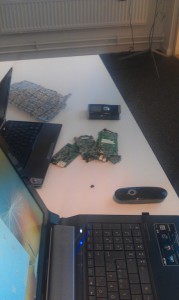
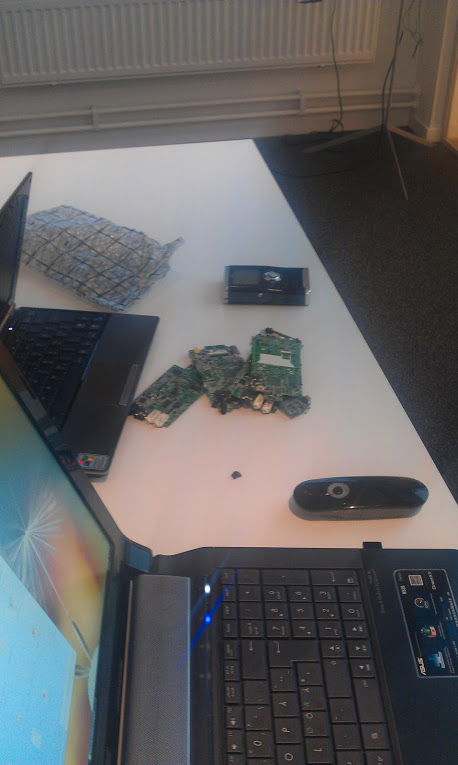
Linus bare targets as seen during his talk On the photo on the right you can see Linus’ stripped down hardware which he explained he had ripped off all components from in order to properly hunt down how things were connected on the PCB.

Coffee

We did not keep the time schedule so we had to get the coffee break in after Linus, and there were buns and so on.

Yocto

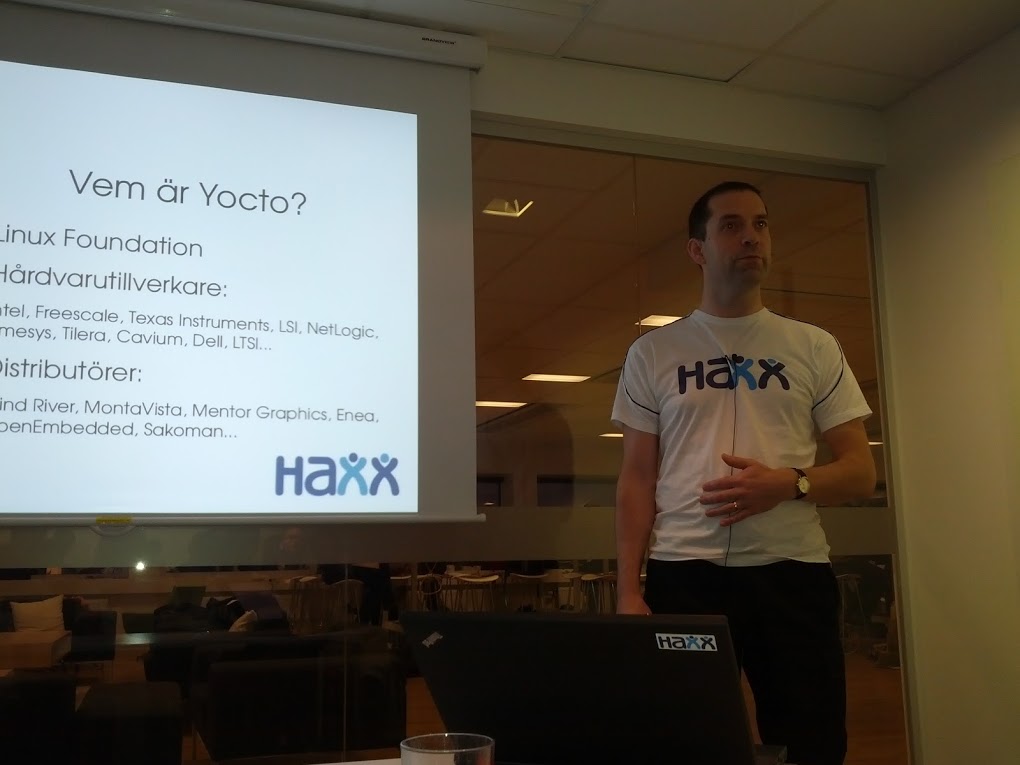
Björn from Haxx then educated the room on the Yocto Project. What it is, why it is, who it is and a little about how it is designed and how it works etc.
bjorn talks on yocto

I think perhaps people started to get a little soft in their brain as we had now blasted through all but one of the talks, and as a speaker finale we had Henrik…

u-boot on Allwinner A10

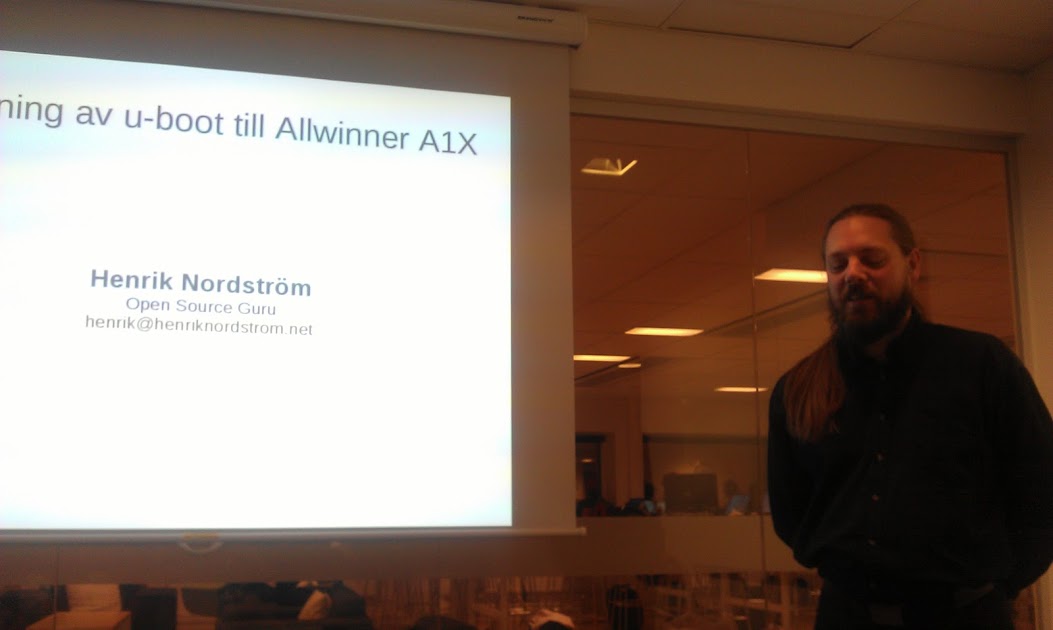
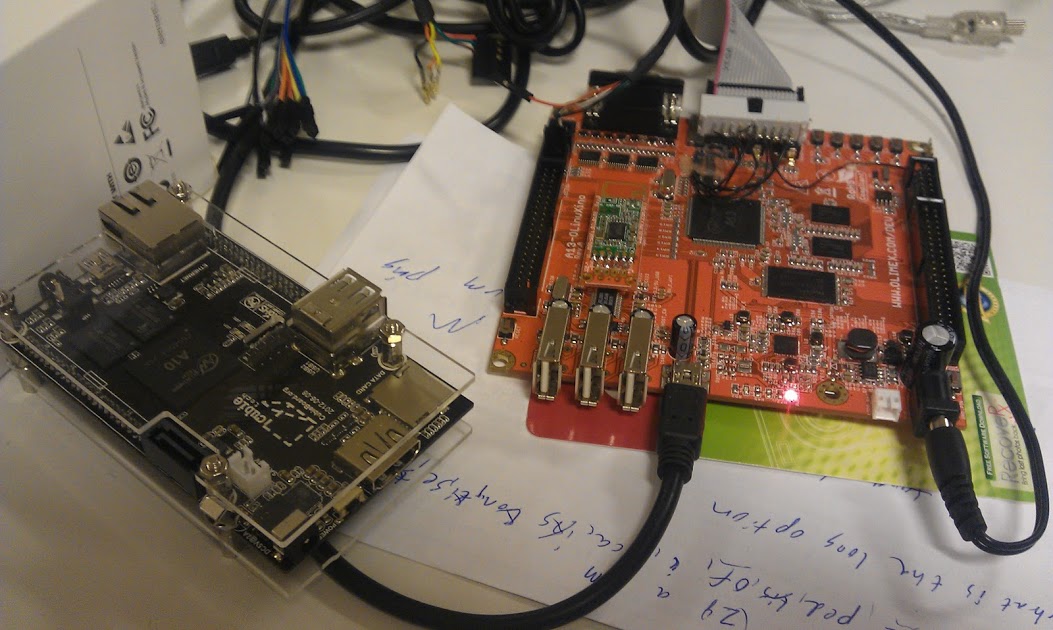
Henrik Nordström did a walk-through explaining some u-boot basics and then explained what he had done for the Allwinner targets and related info.
Henrik talks u-boot
I believe the talks were kind of the glue that made people stick around. Once Henrik was done and there was no more talks planned for the day, it was obvious that it was sort of the signal for people to start calling it a day even though there was still over one hour left until the official end time (20:00).
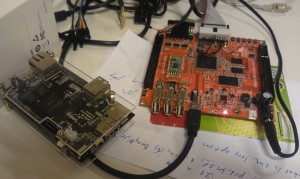
Henriks hardware
Of course I don’t blame anyone for that. I had hardly had any time myself to sit down or do anything relaxing during the day so I was kind of exhausted myself…

Summary

I got a lot of very positive comments from people when they left the facilities with big smiles on their faces, asking for more of these sorts of events in the future.
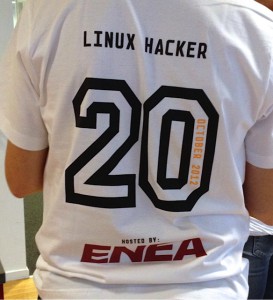
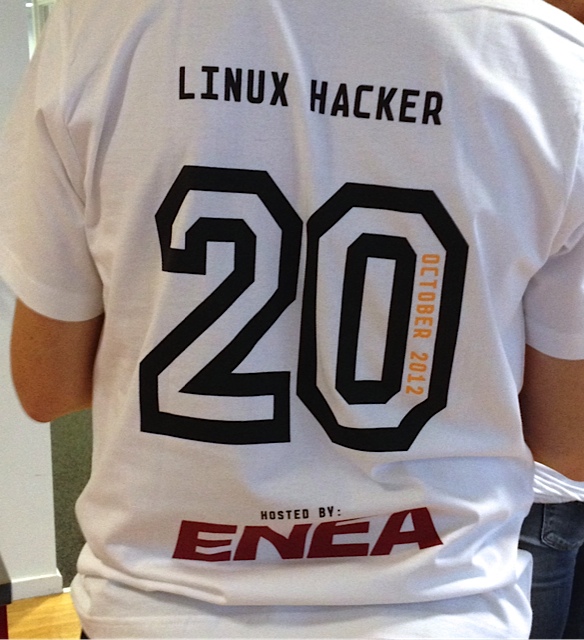
The back of the Enea tshirtI am very happy with the overly positive response, with the massive interest from our community to come to such an event and again, Enea was an awesome sponsor for this.
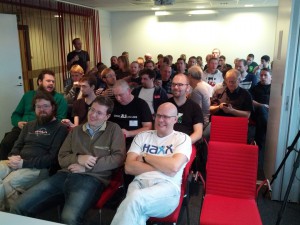
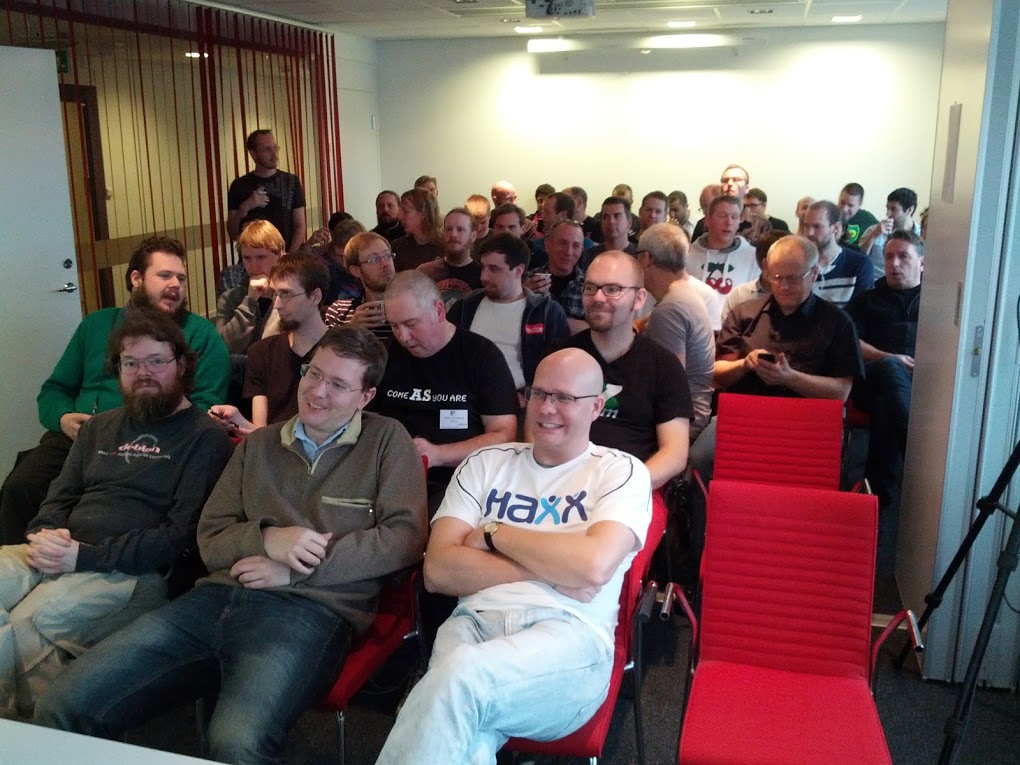
Talk audienceI didn’t get anything done on the raspberry pi during this day. As a matter of fact I never even got around to booting my board, but I figure that wasn’t a top priority for me this day.

The crowd size felt really perfect for these facilities and 40 something also still keeps the spirit of familiarity and it doesn’t feel like a “big” event or so.

Will I work on making another event similar to this again? Sure. It might not happen immediately, but I don’t see why it can’t be made again under similar circumstances.

Credits
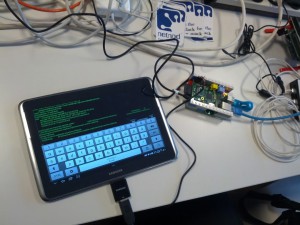
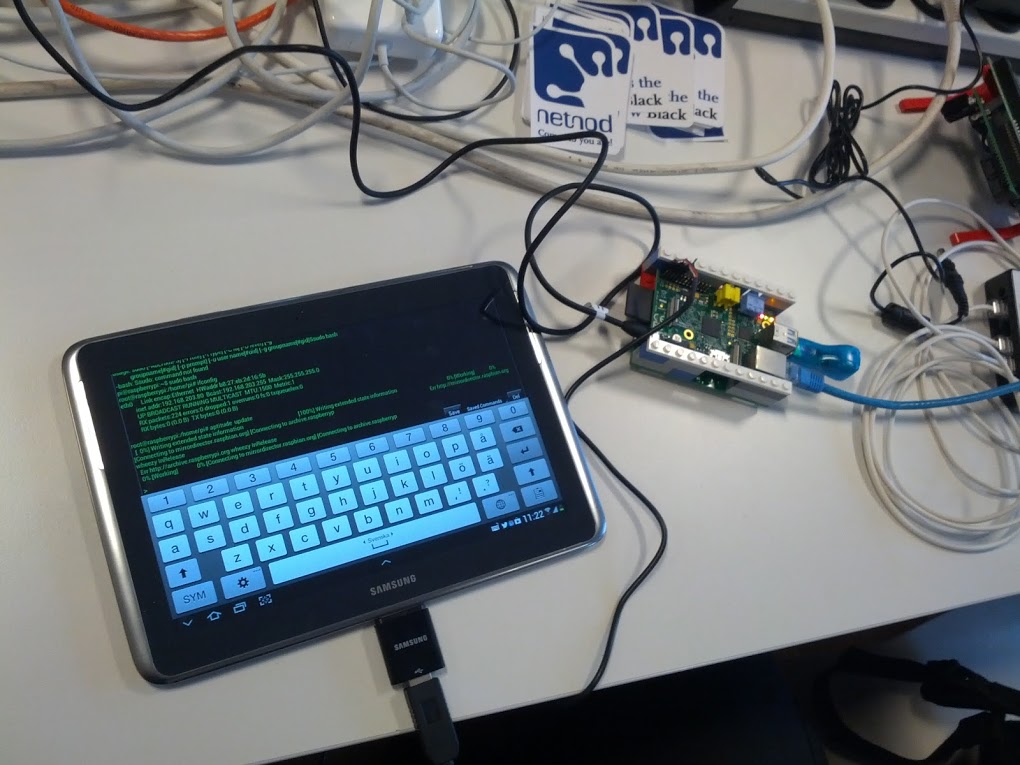
rpi accessed with tabletAll photos on this page were taken by me, Björn Stenberg, Kjell Ericson, Mats Lidell and Mia Åkerström.

Thanks to Jonas, Björn, Linus and Henrik for awesome talks.

Thanks to Enea for sponsoring this event, and Mia then in particular for being a good organizer.

The first month of Spindly

Let me entertain you with some info and updates from the Spindly project. (Unfortunately we don’t have any logo yet so I don’t get to show it off here.)

Since I announced my intention to proceed and write the SPDY library on my own instead of waiting for libspdy to get back to life, I have worked on a number of infrastructure details.

I converted the build to use autotools and libtool to help us really make it a portable library. I made all test cases run without memory leaks and this took some amount of changes of libspdy since it was clearly not written with carefully checking memory and there were also a lot of unnecessarily small mallocs(). Anyone who does malloc() of 8 bytes should reconsider what they’re doing.

Since I’ve had to bugfix the libspdy so much, change structs and APIs and add new functions that were missing I decided that there’s no point in us trying to keep the original libspdy code or code style intact anymore so I’ve re-indented the whole code base to a style I like better than the original style.

I’ve started to write the fundamentals of a client and server demo application that is meant to use the Spindly API to implement both sides. They don’t really do much yet but the basics are in place. I’ve worked more on my idea of what the spindly API should look like. I’ve written the code for a few functions from that API and I’ve also added a few tests for them.

Most of this work has been made by me and me alone with no particular feedback or help by others. I continue to push my changes to github without delay and I occasionally announce stuff on the mailing list to keep interested people up to date. Hopefully this will lead to someone else joining in sooner or later.

The progress has not been very fast, not only because I’ve had to do a lot of thinking about how the API should ideally work to be really useful, but also because I have quite a lot of commitments in other open source projects (primarily curl and libssh2) that require their amount of time, not to mention that my day job of course needs proper attention.

We offer a daily snapshot of the code if you can’t use or don’t want to use git.

Upcoming

I intend to add more functions from the API document, one by one and test cases for each as I go along. In parallel I hope to get the demo client and server to run so that the API proves to actually work properly.

I want the demo client and server also to allow them to run interop tests against other implementations and I want them to be able to speak SPDY with SSL switched off – for debugging reasons. Later on, I hope to be able to use the demo server in the curl test suite so that I can test that the curl SPDY integration works correctly.

We need to either fix “check” (the unit test suite) to work C89 compatible or replace it with something else.

Want to help?

If you want to help, please subscribe to the mailing list, get familiar with the code base, study the API doc and see if it makes sense to you and then help me get that API turned into code…

Join the SPDY library development

Back in October I posted about my intentions to work on getting curl support for SPDY to be based on libspdy. I also got in touch with Thomas, the primary author of libspdy and owner of libspdy.org.

Unfortunately, he was ill already then and he was ill when I communicated with him what I wanted to see happen and I also posted a patch etc to him. He mentioned to me (in a private email) a lot of work they’ve done on the code in a private branch and he invited me to get access to that code to speed up development and allow me to use their code.

I never got any response on my eager “yes, please let me in!” mail and I’ve since mailed him twice over the period of the latest months and as there have been no responses I’ve decided to slowly ramp up my activities on my side while hoping he will soon get back.

I’ve started today by setting up the spdy-library mailing list. I hope to attract fellow interested hackers to join me on this. The goal is quite simply to make a libspdy that works for us. It is to be C89 code that is portable with an API that “makes sense”. I don’t know yet if we will work on libspdy as it currently looks, if Thomas’ team will push their updated work soon or if going with my current spindly fork off github is the way. I hope to get help to decide this!

Join the effort by simply adding yourself the mailing list and participate in the discussions: http://cool.haxx.se/cgi-bin/mailman/listinfo/spdy-library.

And a wiki on github.

Update: I’ve created a hub collecting all related info and pointers over at spindly.haxx.se.

Welcome!

A special thank you from Google

Believe me, this kind of seemingly random act of kindness warms up even the most seasoned and cold hacker’s heart. Look at this excerpt from a mail I received:

From: Stephanie T <…@google.com>
Subject: 2 Googlers would like to recognize your hard work on cURL

Hello Daniel,

As you know, we here in Google’s Open Source Programs Office are always interested in learning about new projects and people in the open source community. To that end, we asked our co-workers to help us by nominating people outside of Google that they thought were doing great things in the world of open source. This information helps us determine which organizations to fund and which projects to select for the Google Summer of Code and related programs.

Chris C and John M (Googlers) believe your work on cURL deserves to be recognized. To show our appreciation for this work, we would like to send you a special thank you gift and 2- $175 USD gift codes (totaling $350 USD) to the Google online store so you can pick out tee shirts or other gifts for yourself and loved ones.

[snip]

Thanks a lot!

(The names of the persons in the mail have been shortened by me to reduce their exposure here.)

Swedish FOSS-magasin

foss-magasinClaes, our friend from foss-sthlm and several Open Source adventures, has just fired off a new initiative: FOSS-Magasin. The site launched for real on the evening November 19th.

Where there’s no real content on the site yet, Claes has set out a mission for himself and future contributors to create a site with technical content in Swedish that we geeks miss. This would be within areas such as FOSS, *nix, networking and more.

Tired of the poor state of technical and IT related media in Sweden that always seem to try to capture the really large audience and therefore always dumb down everything to a silly level, this is meant to be directed on more competent and interested readers.

The site is free and Claes is looking around for contributors to help hem get content to publish. I can only urge my Swedish friends to join up and help it get going, as I think it would be nice to get a proper Swedish tech site. For me, it will be especially interesting for things that actually happen in or otherwise is related to Sweden, as for all the rest I personally have no problems accessing English sites to get the info.

IDG prints lies about RMS

Joel Åsblom works as a “technical writer” at the Swedish “IT magazine” consortium IDG. He got assigned the job of interviewing Richard M Stallman when he was still in Stockholm after his talk at the foss-sthlm event. I had been mailing with another IDG guy (Sverker Brundin) on and off for weeks before this day to try to coordinate a time and place for this interview.

During this time, I forwarded the “usual” requests from RMS himself about how the writer should read up on the facts, the background and history behind Free Software, the GNU project and more. The recommended reading includes a lot of good info. My contact assured me that they knew this stuff and that they had interviewed mr Stallman before.

This November day after the talk done in Stockholm, Roger Sinel had volunteered to drive Richard around with his car to show him around the city and therefore he was also present in the IDG offices when Joel interviewed RMS. Roger recorded the entire interview on his phone. I’ve listened to the complete interview. You can do it as well: Part one as mp3 and ogg, and part 2 as mp3 and ogg. Roughly an hour playback time all together.

The day after the interview, Joel posted a blog entry on the computersweden.se blog (in Swedish) which not only showed disrespect towards his interviewee, but also proved that Joel has not understood very many words of Stallman’s view or perhaps he misread them on purpose. Joel’s blog post translated to English:

Yesterday I got an exclusive interview with legend Richard Stallman, who in the mid 80’s, published his GNU Manifesto on thoughts of a free operating system that would be compatible with Unix. Since then he has traveled the world with his insistent message that it is a crime against humanity to charge for the program.

As the choleric personality he is, I got the interview once I’ve made a sacred promise to never (at least in this interview) write only Linux but also add Gnu before each reference to this operating system. He thinks that his beloved GNU (a recursive acronym for GNU is Not Unix) is the basis of Linux in 1991 and thus should be mentioned in the same breath.

Another strange thing is that this man who KTH and a whole lot of other colleges have appointed an honorary doctorate has such a difficulty to understand the realities of the labor market. During the interview, I take notes on a computer running Windows, which makes him get really upset. He would certainly never condescend to work in an office where he could not run a computer that contains nothing but free software. I try to explain to him that the vast majority of office slaves depend on quite a few programs that are linked to mission-critical systems that are only available for Windows. No, Stallman insists that we must dare to stand up for our rights and not let ourselves be guided by others.

Again and again he returns to the subject that software licensing is a crime against humanity and completely ignores the argument that someone who has done a great job on designing programs also should be able to live from this.

The question then is whether the man is drugged. Yes, I actually asked if he (as suggested in some places) uses marijuana. This is because he has propagated for the drug to be allowed to get used in war veteran wellness programs. The answer is that he certainly think that cannabis should be legalized, but that he has stopped using the drug.

He confuses freedom with price – RMS never refuses anyone the right to charge for programs. Joel belittles the importance of GNU in a modern Linux system. He calls him “choleric”. He claims you cannot earn money on Free Software (maybe he needs to talk to some of the Linux kernel hackers) and he seems to think that Windows is crucial to office workers. Software licenses a crime against humanity? From the person who has authored several very widely used software licenses?

The final part about the drugs is just plain rude.

During the interview, Joel mentions several times that he is using Ubuntu at home (and Stallman explains that it is one of the non-free GNU/Linux systems). It is an excellent proof that just because someone is using a Linux-based OS, they don’t have to know one iota or care the slightest about some of the values and ethics that lie behind its creation.

In the end it leaves you wondering if Joel wrote this crap deliberately or just out of ignorance. It is hard to see that you actually can miss the point to this extent. It is just another proof what kind of business IDG is.

The reaction

Ok, so I felt betrayed and badly treated by IDG as I had helped them get this interview. I emailed Sverker and Joel with my complaints and I pointed out the range of errors and faults in this “blogpost”. I know others did too, and RMS himself of course wasn’t too thrilled with seeing yet another article with someone completely missing the point and putting words into his mouth that he never said and that he doesn’t stand for.

During the weekend I discussed this at FSCONS with friends and there were a lot of head-shakes, sighs and rolling eyes.

The two writers both responded to my harsh criticisms and brushed it off, claiming you can have different views on free vs gratis and so on, and both said something in the style “but wait for the real article”. Ok, so I held off this blog post until the “real article”.

The real article

Stallman – geni och kolerisk agitator, which then is supposedly the real article, was posted on November 15th. It basically changed nothing at all. The same flaws are there – none of the complaint mails and friendly efforts to help them straighten out the facts had any effect. I would say the most fundamental flaws ones are:

With opinions that it is a crime against humanity to charge for software Richard Stallman has made many enemies at home. In South America, he has more friends, some of which are presidents whom he persuaded to join the road to free source code.

Joel claims RMS says you can’t charge for software. The truth is that he repeatedly and with emphasis says that free software means free as in freedom, it does not necessarily means gratis. Listen to the interview, he said this clearly this time as well. And he says so every time he does a public talk.

Richard Stallman is also the founder of the Free Software Foundation, and his big show-piece is the fight against everything regarding software licenses.

Joel claims he has a “fight against everything regarding software licenses”. That’s so stupid I don’t know where to begin. The article itself even has a little box next to it describing how RMS wrote the GPL license etc. RMS is behind some of the most used software licenses in the world.

The fact that Joel tries to infer that Free Software is mostly a deal in South America is just a proof that this magazine (and writer) has no idea about for example the impact of Linux and GNU/Linux in just about all software areas except desktops.

My advice

All this serves just as a proof and a warning: please friends, approach this behemoth known as IDG with utmost care and be sure that they will not understand what you’re talking about if you’re not into their mainstream territory. They deliberately will write crap about you, even after having been told about errors and mistakes. Out of spite or just plain stupidity, I’m not sure.

[I deliberately chose not to include the full article translated to English here since it is mostly repetition.]